

Introduction
Digital marketing is constantly changing, and businesses that fail to keep up often struggle to remain competitive. Every year, new technologies, customer expectations, and online platforms reshape the way brands communicate with their audiences. This is why understanding Digital Marketing Trends has become essential for businesses of every size. Whether you own a small business, work as a marketing professional, or are just beginning your digital journey, knowing the latest trends helps you make smarter decisions and achieve better results.
Unlike traditional marketing, digital marketing allows businesses to reach customers through websites, search engines, social media platforms, email campaigns, online advertisements, and mobile applications. However, simply having an online presence is no longer enough. Modern consumers expect personalized experiences, valuable content, quick responses, and trustworthy brands. Businesses that recognize these expectations and adapt to changing market trends are more likely to build strong customer relationships and increase their sales.
Keeping up with Digital Marketing Trends also helps businesses use their marketing budget more effectively. Instead of spending money on outdated strategies, companies can focus on methods that deliver measurable results. For example, short-form videos, voice search optimization, personalized email marketing, influencer collaborations, and data-driven decision-making have become increasingly important in recent years. These trends help brands connect with customers in meaningful ways while improving engagement and conversion rates.
Another reason these trends matter is the rapid advancement of technology. Search engines regularly update their algorithms, social media platforms introduce new features, and customer behavior continues to evolve. Businesses that stay informed can quickly adjust their marketing strategies instead of falling behind their competitors. This flexibility often becomes a major advantage in highly competitive industries.
This guide is designed for beginners as well as intermediate learners who want a clear understanding of modern digital marketing. Throughout this article, you will discover what digital marketing trends are, why they matter, how to implement them effectively, and the best practices for long-term success. By understanding these changes and applying them wisely, you can create stronger marketing campaigns, improve customer engagement, and achieve sustainable business growth in today’s fast-moving digital environment.
What are Digital Marketing Trends?

Digital Marketing Trends are the latest changes, strategies, technologies, and customer behaviors that influence how businesses promote their products or services online. These trends reflect the evolving digital landscape and help marketers understand what techniques are currently producing the best results. Instead of relying on outdated methods, businesses use these trends to improve visibility, attract more customers, and increase conversions.
Digital marketing trends are not random ideas. They develop because technology changes, customer preferences shift, and online platforms continue to evolve. Search engines update their ranking systems, social media platforms introduce new content formats, and consumers adopt different ways of discovering information. As a result, marketers must continuously adjust their strategies to remain effective.
For example, several years ago, businesses mainly focused on publishing blog posts and running display advertisements. Today, successful marketing often includes short-form videos, personalized email campaigns, interactive content, voice search optimization, influencer partnerships, and mobile-friendly experiences. These approaches better match how modern consumers interact with digital platforms.
Understanding digital marketing trends also means recognizing that customer experience has become a priority. People no longer want generic advertisements. Instead, they expect personalized recommendations, useful information, fast-loading websites, secure online transactions, and meaningful interactions with brands. Companies that meet these expectations are more likely to earn customer trust and loyalty.
Digital marketing trends affect almost every online marketing channel, including:
- Search Engine Optimization (SEO)
- Content Marketing
- Social Media Marketing
- Email Marketing
- Video Marketing
- Mobile Marketing
- Influencer Marketing
- Paid Advertising
- E-commerce Marketing
- Customer Relationship Management
These trends are valuable because they help businesses understand where customers spend their time and how they make purchasing decisions. Instead of guessing what works, marketers can follow proven industry developments supported by consumer behavior and market research.
It is also important to remember that not every trend is suitable for every business. A local bakery may benefit more from location-based marketing and Instagram content, while a software company may achieve better results through educational blogs, webinars, and professional networking platforms. The key is selecting trends that align with your audience and business goals.
In simple terms, digital marketing trends act as a roadmap for modern online success. They guide businesses toward smarter marketing decisions, improved customer engagement, stronger brand awareness, and higher sales by adapting to the ever-changing digital world.
Why are Digital Marketing Trends Important?
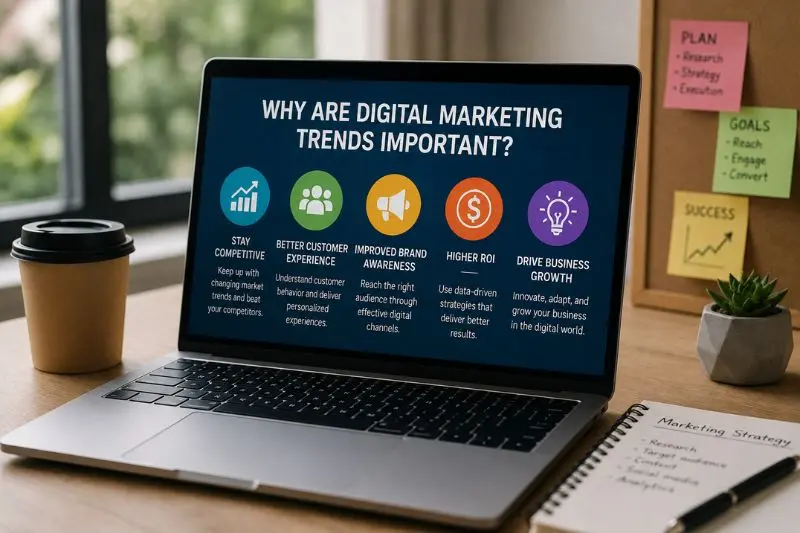
Following Digital Marketing Trends is essential because the online marketplace changes rapidly. Businesses that continue using outdated marketing methods often experience declining website traffic, reduced customer engagement, and lower sales. On the other hand, companies that embrace modern strategies can respond quickly to customer needs and remain competitive.
One of the biggest advantages of staying updated is improved customer understanding. Consumer preferences are constantly evolving, and digital trends reveal how people search for information, interact with brands, and make purchasing decisions. This knowledge allows businesses to create marketing campaigns that truly resonate with their target audience.
Another important benefit is better visibility on search engines. Search engines regularly update their algorithms to improve user experience. Businesses that adapt their SEO strategies according to current trends have a greater chance of appearing higher in search results, attracting more organic traffic without relying entirely on paid advertisements.
Digital marketing trends also improve customer engagement. Interactive content, live videos, personalized emails, and community-driven social media strategies encourage customers to interact with brands rather than simply viewing advertisements. Increased engagement often leads to stronger relationships and higher customer loyalty.
Cost efficiency is another major reason to follow current trends. Modern digital marketing provides detailed performance data, allowing businesses to measure campaign success accurately. Instead of wasting money on ineffective promotions, marketers can optimize their strategies based on real results and customer behavior.
Businesses that stay informed also gain a competitive advantage. When competitors ignore emerging opportunities, forward-thinking companies can establish themselves as industry leaders by adopting innovative marketing techniques early. This often leads to increased brand recognition and market share.
Current trends also support better personalization. Customers appreciate businesses that understand their interests and provide relevant recommendations. Personalized marketing improves customer satisfaction while increasing conversion rates because people receive content that matches their needs.
Finally, adapting to digital marketing trends encourages continuous learning and innovation. Teams become more creative, businesses experiment with new ideas, and marketing strategies evolve alongside changing technology. This mindset helps organizations remain flexible and prepared for future changes in the digital landscape.
Understanding the importance of digital marketing trends is the first step toward building effective online marketing strategies. Businesses that monitor industry changes, study customer behavior, and embrace innovation are better positioned to achieve sustainable growth in an increasingly competitive digital marketplace.
Detailed Step-by-Step Guide to Following Digital Marketing Trends
Keeping up with Digital Marketing Trends does not mean chasing every new idea that appears online. Instead, it means identifying the strategies that match your business goals, understanding your audience, and applying modern techniques that deliver measurable results. The following step-by-step guide will help beginners and intermediate marketers build an effective digital marketing strategy that stays relevant in a constantly changing online environment.
Step 1: Define Your Marketing Goals
Every successful marketing strategy begins with clear objectives. Before adopting any new trend, decide what you want to achieve. Your goals will determine which digital marketing trends deserve your attention.
Common marketing goals include:
- Increasing website traffic
- Building brand awareness
- Generating quality leads
- Improving online sales
- Growing social media followers
- Increasing customer engagement
- Strengthening customer loyalty
For example, if your goal is to increase online sales, you should focus on conversion optimization, personalized marketing, and customer experience rather than simply increasing social media followers.
Step 2: Understand Your Target Audience
Modern marketing is customer-focused. Understanding your audience helps you choose trends that actually improve results instead of wasting time on strategies that do not fit your market.
Consider these important questions:
- Who are your ideal customers?
- What problems do they face?
- Which social media platforms do they use?
- What type of content do they enjoy?
- How do they search for products or services?
Creating customer profiles allows businesses to produce more relevant content and improve communication across every marketing channel.
Step 3: Build a Strong Website
Your website remains the foundation of digital marketing. No matter how popular social media becomes, most customers eventually visit your website before making a purchase or contacting your business.
A high-quality website should include:
- Fast loading speed
- Mobile-friendly design
- Easy navigation
- Secure HTTPS connection
- Clear contact information
- Helpful content
- Strong call-to-action buttons
A professional website creates trust and supports every other digital marketing strategy.
Step 4: Focus on High-Quality Content
Content continues to play a central role in successful digital marketing. Instead of publishing large amounts of content, businesses should focus on creating useful, informative, and engaging material that solves customer problems.
Effective content may include:
- Blog articles
- Educational guides
- Case studies
- Videos
- Infographics
- Podcasts
- Product tutorials
- Frequently Asked Questions
Helpful content builds authority while encouraging visitors to return to your website.
Step 5: Improve Your Search Engine Optimization
Search Engine Optimization (SEO) remains one of the most valuable Digital Marketing Trends because organic traffic often provides long-term results.
Important SEO practices include:
- Researching relevant keywords
- Writing helpful content
- Optimizing page titles
- Creating descriptive headings
- Improving page speed
- Adding internal links
- Optimizing images
- Earning quality backlinks
Good SEO helps your website appear higher in search results, increasing visibility without depending entirely on paid advertising.
Step 6: Create Valuable Social Media Content
Social media platforms continue to evolve rapidly. Instead of posting random updates, businesses should publish content that encourages conversations and provides value.
Popular content formats include:
- Short videos
- Educational posts
- Customer success stories
- Behind-the-scenes content
- Live sessions
- Polls and surveys
- Product demonstrations
- Interactive questions
Consistency matters more than posting large amounts of content. A regular publishing schedule helps maintain audience interest.
Step 7: Personalize Customer Experiences
Customers now expect personalized communication rather than generic marketing messages.
Businesses can personalize marketing by:
- Recommending relevant products
- Sending customized email campaigns
- Using customer purchase history
- Segmenting email subscribers
- Creating personalized landing pages
Personalization increases customer satisfaction while improving conversion rates.
Step 8: Invest in Video Marketing
Video continues to dominate online engagement because people often prefer watching information instead of reading long text.
Effective video ideas include:
- Product demonstrations
- Educational tutorials
- Customer testimonials
- Frequently asked questions
- Company introductions
- Industry updates
Short videos are especially effective on modern social media platforms because they quickly capture attention.
Step 9: Optimize for Mobile Users
Most internet users now browse websites using smartphones. Businesses that ignore mobile optimization risk losing valuable customers.
Mobile optimization includes:
- Responsive website design
- Fast loading pages
- Simple navigation
- Easy-to-read text
- Mobile-friendly forms
- Clickable buttons
A positive mobile experience improves customer satisfaction and supports better search engine rankings.
Step 10: Measure Performance Regularly
Digital marketing should always be based on data rather than assumptions.
Track important performance indicators such as:
- Website visitors
- Bounce rate
- Conversion rate
- Click-through rate
- Email open rate
- Social media engagement
- Customer retention
- Return on investment
Reviewing these metrics helps businesses identify successful strategies while improving weaker areas.
Benefits of Digital Marketing Trends
Businesses that stay updated with Digital Marketing Trends enjoy several long-term advantages that improve marketing performance and customer satisfaction.
Key Benefits
- Helps businesses remain competitive in changing markets.
- Improves customer engagement across digital platforms.
- Increases brand visibility through modern marketing strategies.
- Supports better search engine rankings.
- Generates higher-quality leads.
- Builds stronger customer relationships.
- Improves customer trust and credibility.
- Encourages innovation within marketing teams.
- Makes marketing campaigns more cost-effective.
- Provides measurable performance data.
- Supports faster decision-making.
- Improves customer retention.
- Increases conversion rates.
- Enhances brand reputation.
- Creates better user experiences.
- Strengthens long-term business growth.
For example, a company that regularly updates its content strategy and improves its website experience is more likely to attract returning visitors than a business using outdated marketing techniques.
Disadvantages and Risks of Digital Marketing Trends
Although following digital marketing trends offers many benefits, businesses should also understand the potential challenges. Not every trend delivers immediate success, and blindly following every new strategy can create unnecessary expenses.
Common Risks
- Trends change quickly, requiring continuous learning.
- Some marketing techniques become outdated within months.
- Increased competition makes standing out more difficult.
- Constant platform updates require strategy adjustments.
- New tools may require additional training.
- Marketing costs may increase if campaigns are poorly planned.
- Poor implementation can waste valuable resources.
- Businesses may focus too much on trends instead of customer needs.
- Frequent algorithm changes may affect website traffic.
- Measuring success sometimes requires advanced analytics knowledge.
The best approach is to evaluate each trend carefully before investing significant time or money. Businesses should focus on strategies that align with their objectives instead of adopting every popular marketing tactic.
Digital marketing success depends on balance. Combining proven marketing principles with carefully selected modern trends creates stronger long-term results than constantly chasing every new online development.
By following these step-by-step practices while understanding both the advantages and possible risks, businesses can confidently adapt to changing market conditions. Instead of reacting to every trend, they can build flexible marketing strategies that improve customer relationships, strengthen brand authority, and support sustainable business growth for years to come.
Common Mistakes to Avoid
Even the best marketing strategy can fail if common mistakes are ignored. Many businesses adopt new Digital Marketing Trends without proper planning, leading to poor results and wasted resources. Understanding these mistakes helps you build a stronger and more effective digital marketing strategy.
One common mistake is following every new trend without considering whether it fits your business goals. Not every trend is suitable for every industry. Before implementing a new strategy, evaluate whether it aligns with your audience, products, and objectives.
Another mistake is ignoring your target audience. Successful marketing always focuses on customer needs rather than business preferences. Creating content without understanding what your audience wants often results in low engagement and poor conversion rates.
Many businesses also neglect Search Engine Optimization (SEO). Publishing excellent content is valuable, but if it is not optimized for search engines, potential customers may never discover it. Keyword research, proper headings, internal linking, and mobile optimization remain essential.
Inconsistent branding is another issue. Your website, social media profiles, emails, and advertisements should all present a consistent brand identity. Consistency builds trust and makes your business easier to recognize.
Some businesses focus only on attracting new customers while ignoring existing ones. Customer retention is usually more cost-effective than acquiring new customers. Regular communication, personalized offers, and excellent customer service encourage repeat business.
Failing to measure marketing performance is another serious mistake. Without reviewing website traffic, engagement, conversions, and campaign performance, it becomes difficult to improve future marketing efforts.
Finally, many marketers expect immediate success. Digital marketing requires patience, testing, and continuous improvement. Long-term consistency often produces better results than short-term experiments.
FAQs
2. Why should businesses follow Digital Marketing Trends?
Businesses should follow current trends because customer expectations, search engine algorithms, and online platforms constantly change. Staying updated helps improve visibility, customer satisfaction, brand awareness, and overall marketing performance.
3. Which Digital Marketing Trend is the most important?
There is no single trend that suits every business. However, content marketing, Search Engine Optimization (SEO), personalized marketing, video content, mobile optimization, and data-driven decision-making continue to deliver strong long-term results for many industries.
4. How often do Digital Marketing Trends change?
Some trends remain effective for several years, while others change within months. Social media features, advertising platforms, and search engine algorithms frequently evolve, making continuous learning an important part of digital marketing success.
5. Can small businesses benefit from Digital Marketing Trends?
Yes. Small businesses often benefit significantly because digital marketing provides affordable ways to reach targeted audiences. Even with limited budgets, businesses can improve visibility through SEO, social media marketing, email campaigns, and valuable content.
6. Is digital marketing expensive?
Digital marketing can fit almost any budget. Many strategies, such as blogging, SEO, and organic social media marketing, require more time than money. Paid advertising can also be adjusted according to available resources.
7. How can beginners learn digital marketing?
Beginners should start by understanding basic marketing principles, learning SEO, creating quality content, studying social media marketing, practicing email marketing, and analyzing campaign performance. Continuous learning and practical experience are the best ways to develop digital marketing skills.
Expert Tips and Bonus Points
Following Digital Marketing Trends successfully requires more than simply copying what other businesses are doing. Experienced marketers focus on long-term improvement rather than short-term popularity.
Here are several practical tips that can improve your digital marketing strategy:
- Always create content that solves customer problems.
- Focus on quality instead of quantity.
- Keep your website updated and secure.
- Optimize every page for mobile devices.
- Build trust through honest and transparent communication.
- Maintain a consistent publishing schedule.
- Monitor marketing performance regularly.
- Test different headlines, images, and calls to action.
- Update older content to keep information relevant.
- Invest in learning new marketing skills.
- Encourage customer feedback and reviews.
- Build an email list instead of depending only on social media.
- Create content for every stage of the customer journey.
- Improve page speed for a better user experience.
- Stay informed about industry updates without following every trend blindly.
Bonus points for long-term success include developing a strong brand identity, understanding customer behavior, maintaining high-quality customer service, and continuously improving marketing campaigns based on real performance data.
Businesses that combine creativity with careful planning often outperform competitors that rely only on short-term marketing tactics.
Conclusion
The digital world continues to evolve, making it essential for businesses to understand and adapt to Digital Marketing Trends. New technologies, changing customer expectations, and evolving online platforms create both challenges and opportunities. Businesses that remain informed can make smarter marketing decisions, improve customer experiences, and strengthen their competitive position.
Throughout this guide, we explored the meaning of digital marketing trends, their importance, practical implementation steps, key benefits, possible risks, common mistakes, and expert recommendations. While new trends appear regularly, the most successful businesses focus on providing genuine value to their customers rather than simply following popular strategies.
It is important to remember that digital marketing is not about using every available platform or adopting every new trend. Instead, success comes from selecting the right strategies for your business, understanding your audience, producing valuable content, optimizing your online presence, and continuously measuring results. Consistency, patience, and a willingness to learn are often more valuable than chasing short-term success.
Whether you are launching a new business, growing an existing brand, or developing your marketing skills, staying updated with Digital Marketing Trends will help you adapt to changes more confidently. Every improvement you make today contributes to stronger customer relationships, increased visibility, and sustainable business growth in the future.
As technology continues to advance, marketers who embrace innovation while focusing on customer needs will remain ahead of the competition. By applying the strategies discussed in this guide and reviewing your marketing efforts regularly, you can build effective campaigns that deliver lasting results. Digital marketing is an ongoing journey, and those who continue learning, testing, and improving will be best prepared for future opportunities in the ever-changing digital landscape.




1 Comment
Pingback: How To Start A Business In 2026