Introduction
Starting a business has become one of the most attractive career paths in today’s world. Many people no longer want to rely only on traditional jobs; instead, they want to build something of their own. The idea of financial freedom, independence, and creating something meaningful motivates thousands of new entrepreneurs every day. However, while starting a business looks simple from the outside, building a successful startup is much more complex in reality.
Most startups fail not because the idea is bad, but because the execution is weak. Entrepreneurs often jump into business without proper planning, market understanding, or financial preparation. This leads to confusion, wasted resources, and eventually failure. That is why understanding startup success tips is extremely important for beginners and even intermediate business owners.
A startup is not just about launching a product or service. It is about solving a real problem in a way that people are willing to pay for. It is about building trust, understanding customer needs, and continuously improving your solution. In today’s competitive market, customers have endless choices, so only those startups survive that deliver real value.
Another important reality is that success does not come overnight. Many people think that startups grow quickly, but in most cases, growth is slow, unstable, and full of challenges in the beginning. Founders must stay patient, focused, and consistent even when results are not immediate.
In this guide, we will explore practical startup success tips that can help you build a strong foundation. These tips are not theoretical; they are based on real-world business principles that successful entrepreneurs follow. Whether you are planning your first startup or already running a small business, this guide will help you make better decisions, avoid common mistakes, and increase your chances of long-term success.
What is Startup Success?

- Startup success refers to the ability of a new business to grow, survive, and become profitable in a competitive environment. It is not limited to launching a product or getting initial customers. Instead, it includes long-term sustainability, customer satisfaction, and financial stability.
- A successful startup is one that solves a real problem and continues to grow over time. It does not depend only on a single idea but on how well that idea is executed, improved, and scaled. Many startups start with a strong concept, but only those succeed that continuously adapt to market needs.
- Startup success can be measured in different ways. For some entrepreneurs, success means reaching profitability. For others, it may mean attracting investors or expanding into new markets. Some startups consider success as building a strong customer base or brand recognition. So, success is not a fixed definition; it depends on goals and vision.
However, one thing remains common in all successful startups: they focus on delivering value. If your product or service does not solve a real problem, it will not survive in the long run. This is why most startup success tips focus heavily on understanding customers and validating ideas before investing heavily.
Another important factor in startup success is adaptability. Markets change quickly, customer preferences evolve, and new competitors enter the market regularly. A startup that cannot adapt will struggle to survive. Successful founders are flexible and willing to change their strategy when needed.
In simple words, startup success is not just about starting a business; it is about building a system that can grow, scale, and sustain itself over time.
Why Startup Success Matters
- Startup success is important for many reasons, both personal and economic. On a personal level, it gives entrepreneurs financial independence and the ability to control their future. Instead of working for someone else, they create their own opportunities.
- From a broader perspective, startups play a major role in economic growth. They create jobs, introduce innovation, and improve industries. Many of today’s big companies started as small startups that solved simple problems in unique ways. Their success transformed entire markets.
- Startup success also encourages innovation. When startups succeed, they inspire other entrepreneurs to bring new ideas into the market. This leads to better products, improved services, and more competition, which ultimately benefits customers.

However, failure is also common in the startup world. Many businesses shut down within the first few years due to poor planning, lack of research, or financial mismanagement. This is why startup success tips are so valuable—they help reduce risks and increase the chances of building a stable business.
Without proper knowledge, many entrepreneurs waste time and money on ideas that never work in real markets. But with the right guidance, they can avoid these mistakes and build something sustainable.
Foundation of a Successful Startup
Before jumping into advanced strategies, it is important to understand the foundation of a successful startup. Every strong business is built on a few core principles.
Clear Problem Identification
Every successful startup begins with a problem. If there is no problem, there is no need for a solution. Entrepreneurs must focus on identifying real issues that people face in daily life or business operations.
The stronger the problem, the easier it becomes to build a valuable solution. This is one of the most important startup success tips that many beginners ignore.
Strong Understanding of Market
Understanding your market means knowing your customers, competitors, and industry trends. Without market knowledge, even a good idea can fail.
You must know:
- Who your customers are
- What they need
- What competitors are offering
- What gaps exist in the market
Value Creation
A startup only succeeds when it creates value. Customers will only pay for something if it solves their problem better than existing alternatives.
Value creation is the heart of every successful business model.
Execution Over Idea
Ideas are easy, but execution is difficult. Many people have great ideas, but only a few execute them properly. Successful startups focus more on action than planning.
Even a simple idea can succeed if executed well.
Continuous Learning
Markets change constantly. Successful entrepreneurs never stop learning. They study customer behavior, analyze feedback, and improve their strategies regularly.
This mindset is essential for long-term growth.
Early Stage Challenges
In the early stages, startups face several challenges that can slow down growth or even cause failure if not handled properly.
Some common challenges include:
- Limited funding
- Lack of experience
- Unclear business direction
- Difficulty in finding customers
- Strong competition
These challenges are normal and part of every startup journey. The key is to handle them with patience and smart decision-making.
Step-by-Step Guide to Startup Success
Once you understand what a startup is and why it matters, the next step is learning how to actually build one successfully. Many entrepreneurs fail because they jump directly into execution without following a structured process. These startup success tips will help you move step by step in a clear direction.
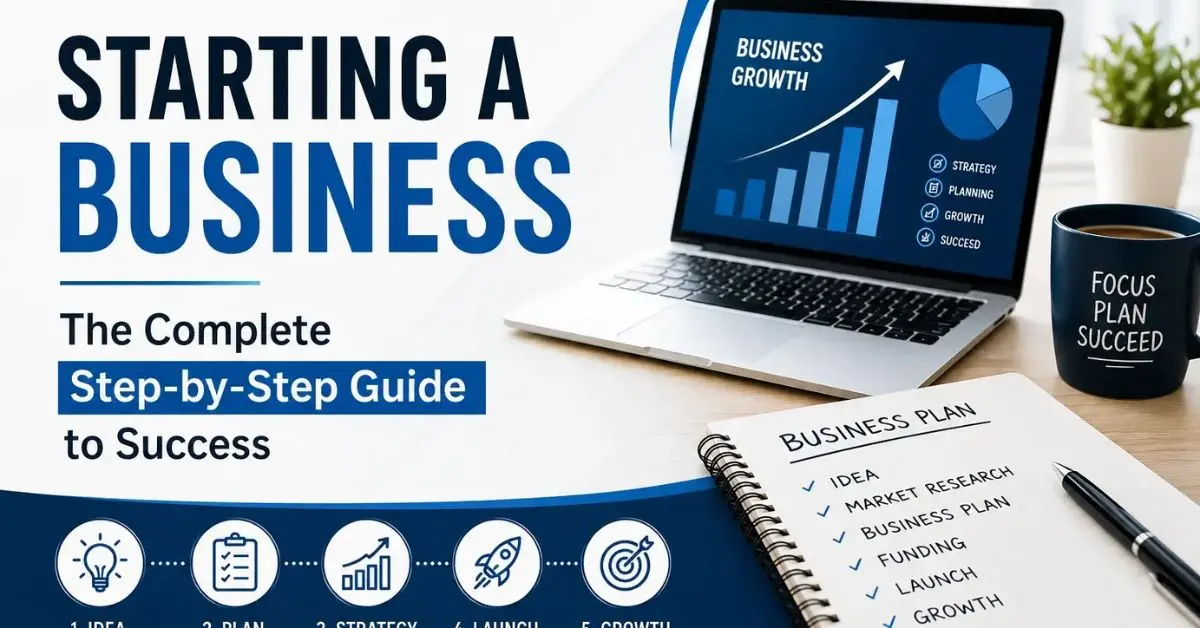
A successful startup is not built randomly. It follows a system: idea → validation → planning → product → marketing → growth. If any step is missing, the chances of failure increase.
Identify a Real Problem
Every successful startup begins with a real-world problem. If there is no problem, there is no business opportunity. This is one of the most important startup success tips that many beginners ignore.
Instead of thinking “What can I sell?”, think:
- What problem do people face daily?
- What do customers complain about?
- What tasks are difficult or time-consuming?
For example:
- People struggle with online learning → EdTech startups
- Businesses need marketing → Digital agencies
- Transportation issues → Ride-sharing apps
The stronger the problem, the stronger your startup idea will be.
Validate Your Idea Before Investing
Idea validation means checking whether people actually need your product or not. Many startups fail because they build something nobody wants.
You can validate your idea in simple ways:
- Ask potential customers directly
- Conduct online surveys
- Create a landing page
- Offer a small prototype
- Test interest through social media
If people show interest or willingness to pay, your idea has potential. If not, you need to improve or change it.
Validation is one of the most powerful startup success tips because it saves time, money, and effort.
Build a Simple Business Plan
A business plan does not need to be complex. It just needs clarity.
A strong startup business plan includes:
- What problem you solve
- Who your customers are
- How you will earn money
- What your marketing strategy is
- What your costs are
The purpose of a business plan is to give you direction. Without direction, even a good idea can fail.
Many startups fail because they start without any planning at all.
Create a Minimum Viable Product (MVP)
An MVP (Minimum Viable Product) is a basic version of your product that solves the main problem.
Instead of building a perfect product, build a simple version first. This is one of the smartest startup success tips used by successful companies.
Benefits of MVP:

Saves money
Saves time
Helps get real feedback
Reduces risk
For example:
Instead of building a full mobile app, you can start with a simple website or prototype.
Once users respond positively, you can improve and expand.
Focus on Customer Feedback
Customers are the backbone of every startup. If you ignore them, your business will not grow.
Always:
- Listen to feedback
- Analyze complaints
- Improve your product
- Add useful features
Successful startups treat feedback as a gift, not criticism.
If 10 people say the same problem, it is a real issue that needs fixing.
Build a Strong Team
No startup can succeed alone. A strong team is one of the biggest success factors.
A good team should have:
- Technical skills
- Marketing skills
- Management skills
- Problem-solving ability
When hiring:
- Choose attitude over experience sometimes
- Select people who believe in your vision
- Build trust and communication
A motivated team can turn a small idea into a big business.
Manage Your Finances Carefully
Poor financial management is one of the top reasons startups fail. You must control spending from day one.
Important financial startup success tips:
- Track every expense
- Avoid unnecessary costs
- Keep emergency funds
- Focus on cash flow
- Reinvest profits wisely
Even profitable startups fail if they run out of cash.
Money management is survival management in startups.
Build Branding and Marketing Strategy
Even a great product will fail if nobody knows about it. Marketing is essential for growth.
Key marketing methods:
- Social media marketing
- Content creation
- SEO optimization
- Influencer marketing
- Paid advertising
Branding is also important. A strong brand builds trust and recognition.
Ask yourself:
Why should customers choose you over others?
If you cannot answer this clearly, your branding needs improvement.
- Focus on Growth and Improvement
Startup success is not a one-time achievement. It is a continuous process.
Successful startups:
- Analyze performance regularly
- Improve product features
- Expand customer base
- Adapt to market changes
Growth comes from constant learning and improvement.
- Stay Consistent and Patient
Many startups fail not because of poor ideas, but because founders give up too early.
Success takes time. There will be:
- Slow growth phases
- Financial pressure
- Competition challenges
But consistency is the key. If you stay focused and keep improving, results will come.
This is one of the most powerful startup success tips used by successful entrepreneurs worldwide.
Benefits of Startup Success Tips
Following structured startup success tips can make a huge difference in how your business grows. These tips are not just theoretical ideas; they are practical strategies used by successful entrepreneurs around the world.
Here are the major benefits:
1. Reduces Failure Risk
When you follow proper steps like idea validation and planning, the chances of failure decrease significantly. You avoid wasting time and money on useless ideas.
2. Improves Decision Making
Clear startup success tips help you make better decisions based on logic and data instead of emotions or guesswork.
3. Saves Time and Resources
Instead of trial and error, you follow a structured path. This saves both time and financial resources.
4. Builds Strong Customer Relationships
When you focus on customer needs, you naturally build trust and long-term relationships with your users.
5. Increases Profitability
Better planning, marketing, and execution directly lead to higher profits and stable income.
6. Encourages Innovation
Following smart strategies allows you to experiment safely and innovate without extreme risks.
Risks and Disadvantages of Starting a Startup
Even with the best startup success tips, entrepreneurship always involves some level of risk.
1. High Failure Rate
Many startups fail within the first few years due to poor execution or weak demand.
2. Financial Pressure
In the early stages, income is uncertain, and expenses can create stress.
3. Market Competition
Almost every industry is competitive, making it difficult for new startups to stand out.
4. Emotional Stress
Entrepreneurs often face pressure, uncertainty, and long working hours.
5. Slow Growth
Startups usually grow slowly in the beginning, which can be frustrating for founders expecting quick results.
However, these risks can be managed with proper planning and strong execution.
Common Mistakes to Avoid

Many startups fail not because of big problems, but because of small avoidable mistakes.
1. Starting Without Research
Launching a business without understanding the market is one of the biggest mistakes.
2. Ignoring Customer Feedback
Customers tell you exactly what needs improvement. Ignoring them leads to failure.
3. Overspending Early
Spending too much on branding or features before validation can drain resources quickly.
4. No Clear Business Model
Without a clear way to earn money, your startup cannot survive long-term.
5. Poor Marketing Strategy
Even good products fail if people don’t know they exist.
6. Scaling Too Fast
Expanding too early without stability can collapse the entire business.
FAQs
1. What are startup success tips?
Startup success tips are practical strategies that help entrepreneurs build, manage, and grow successful businesses with lower risk and better planning.
2. Why do most startups fail?
Most startups fail due to lack of market research, poor financial management, weak execution, and no real customer demand.
3. How important is idea validation?
Idea validation is very important because it ensures that people actually need your product before you invest heavily.
4. Can a startup succeed without investment?
Yes, many startups start with low investment using bootstrapping, digital tools, and organic marketing strategies.
5. How long does it take for a startup to succeed?
There is no fixed time. Some startups grow in months, while others take years depending on industry and execution.
6. What is the most important factor in startup success?
The most important factor is solving a real problem and delivering consistent value to customers.
Expert Tips for Startup Success
Here are some advanced startup success tips used by experienced entrepreneurs:
- Focus on solving one problem at a time
- Always prioritize customer needs over personal assumptions
- Use data for every major decision
- Keep your business model simple in the beginning
- Build strong relationships with early customers
- Reinvest profits into growth and improvement
- Stay flexible and ready to change strategy
- Learn from competitors but avoid copying them
These expert-level strategies can significantly improve your chances of long-term success.
Conclusion
- Building a successful startup is a journey that requires patience, discipline, and continuous learning. It is not something that happens overnight, but rather something that is built step by step through consistent effort and smart decision-making.
- Throughout this guide, we explored essential startup success tips that help entrepreneurs move in the right direction. From identifying a real problem and validating ideas to building products, managing finances, and scaling growth, every step plays a critical role in long-term success.
- One of the most important lessons is that execution matters more than ideas. Many people have brilliant ideas, but only those who take action and stay consistent turn those ideas into successful businesses. Challenges such as financial pressure, competition, and uncertainty are normal in every startup journey. However, successful entrepreneurs treat these challenges as opportunities to learn and improve.
Startup success also depends heavily on adaptability. Markets change, customer needs evolve, and technology advances rapidly. Businesses that adapt quickly survive longer and grow stronger.
In the end, success comes to those who stay focused, patient, and committed to delivering value. If you follow the right startup success tips, avoid common mistakes, and continuously improve your strategies, your startup can grow into a strong, profitable, and sustainable business over time.