

Introduction
Technology is changing the way businesses operate, communicate, and deliver value to customers. Organizations across industries are embracing new digital solutions to improve efficiency, enhance customer experiences, and remain competitive in a rapidly evolving marketplace. As a result, understanding digital transformation trends has become essential for business leaders, professionals, entrepreneurs, and even students interested in the future of work.
Digital transformation is more than simply adopting new technology. It involves rethinking processes, business models, and organizational culture to take full advantage of digital opportunities. Companies that successfully embrace transformation often become more agile, innovative, and responsive to customer needs.
From cloud computing and automation to data analytics and cybersecurity, modern organizations are investing heavily in digital initiatives. These investments help businesses streamline operations, reduce costs, and make better decisions based on real-time information.
For beginners, learning about digital transformation trends provides valuable insight into how technology is shaping industries. For professionals and business owners, understanding these trends can support strategic planning and long-term growth. This guide explores the meaning of digital transformation trends, why they matter, practical implementation steps, benefits, challenges, common mistakes, frequently asked questions, and expert recommendations for navigating the digital future.
What is Digital Transformation Trends?
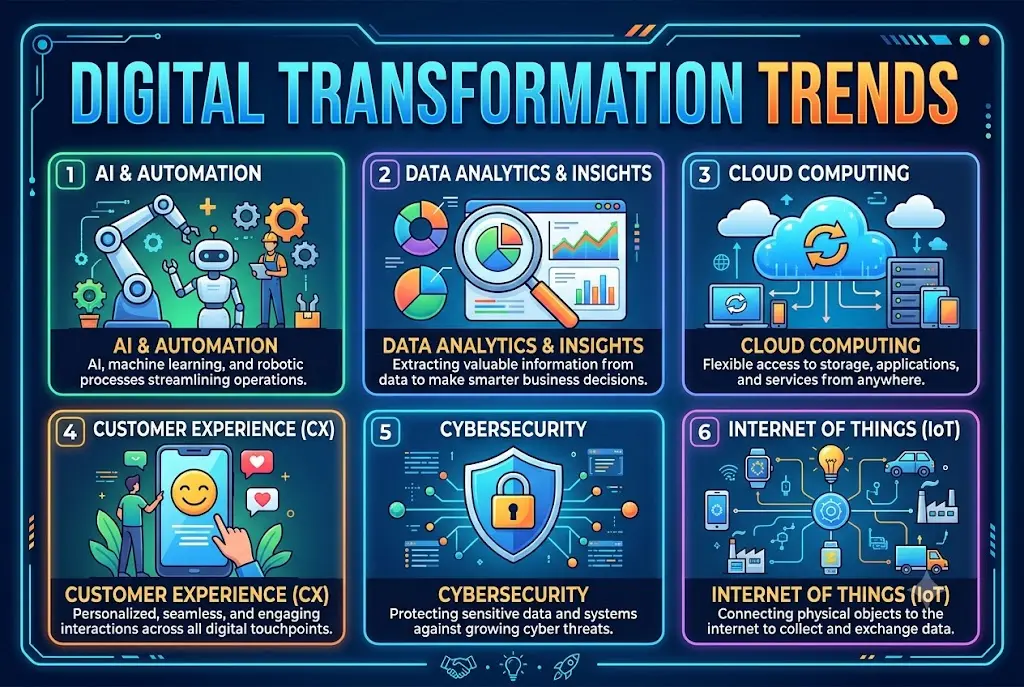
Digital transformation trends refer to the evolving technologies, strategies, and practices that organizations adopt to improve operations, enhance customer experiences, and drive innovation through digital solutions.
These trends often include:
- Cloud computing
- Data analytics
- Business automation
- Artificial intelligence
- Cybersecurity improvements
- Remote collaboration tools
- Digital customer experiences
- Internet of Things technologies
Digital transformation is not a one-time project. Instead, it is an ongoing process that helps businesses adapt to changing market demands and technological advancements.
For example, a retail company may implement online shopping platforms and personalized customer recommendations, while a manufacturing company may use smart sensors to improve production efficiency. Both examples demonstrate how digital transformation supports innovation and growth.
Why is Digital Transformation Trends Important?
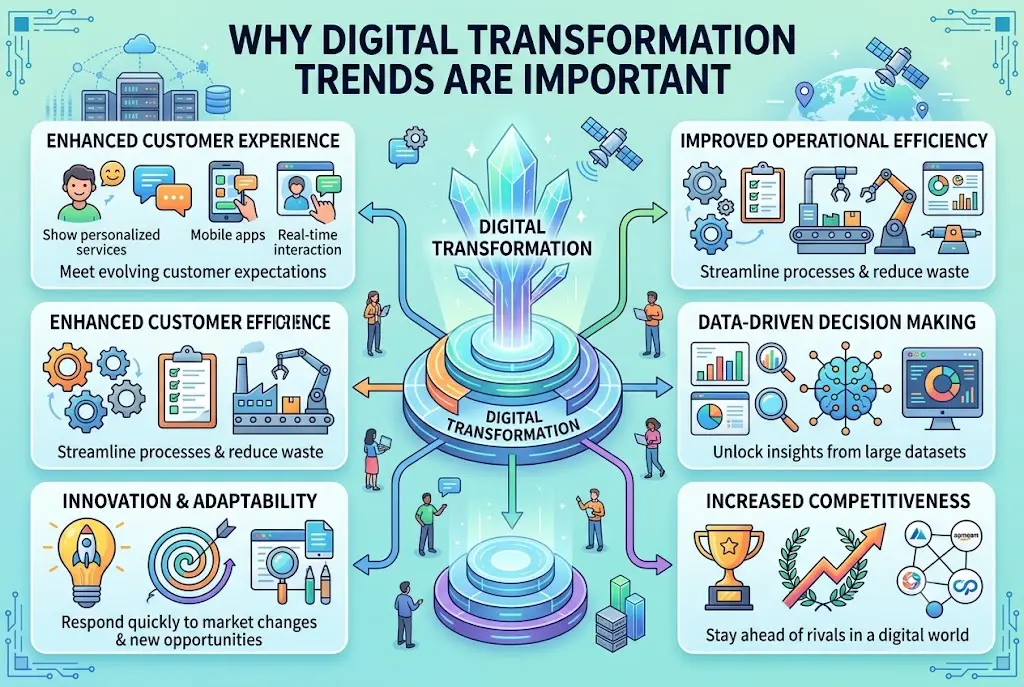
Digital transformation trends are important because they help organizations remain competitive and responsive in a technology-driven world.
Improves Operational Efficiency
Digital tools automate repetitive tasks and streamline business processes.
Enhances Customer Experience
Modern consumers expect fast, personalized, and convenient interactions.
Supports Better Decision-Making
Real-time data and analytics provide valuable business insights.
Encourages Innovation
Technology creates opportunities for new products, services, and business models.
Strengthens Competitive Advantage
Organizations that adapt quickly often outperform slower competitors.
Increases Business Agility
Digital solutions help companies respond rapidly to market changes.
These benefits make digital transformation a key priority for modern organizations.
Detailed Step-by-Step Guide
Step 1: Assess Current Operations
Begin by evaluating existing business processes.
Identify:
- Inefficiencies
- Manual tasks
- Customer challenges
- Technology gaps
A clear assessment helps define transformation goals.
Step 2: Define Business Objectives
Establish measurable objectives.
Examples include:
- Improving customer satisfaction
- Reducing operational costs
- Increasing productivity
- Enhancing data management
Clear goals guide transformation efforts.
Step 3: Develop a Digital Strategy
Create a roadmap that aligns technology investments with business priorities.
Your strategy should include:
- Budget planning
- Resource allocation
- Timeline development
- Performance metrics
Step 4: Invest in Cloud Technologies
Cloud solutions provide flexibility, scalability, and cost efficiency.
Benefits include:
- Remote access
- Improved collaboration
- Simplified data storage
- Faster deployment
Cloud adoption remains one of the most influential digital transformation trends.
Step 5: Use Data Analytics
Data-driven decision-making is becoming increasingly important.
Analytics can help organizations:
- Understand customer behavior
- Monitor performance
- Identify opportunities
- Reduce risks
Accurate insights support smarter business decisions.
Step 6: Implement Automation
Automation reduces repetitive work and improves consistency.
Examples include:
- Automated customer support
- Invoice processing
- Marketing campaigns
- Inventory management
Automation increases efficiency and productivity.
Step 7: Strengthen Cybersecurity
As digital systems expand, security becomes increasingly important.
Focus on:
- Data protection
- Employee training
- Access controls
- Threat monitoring
Strong cybersecurity protects valuable business assets.
Step 8: Enhance Customer Experience
Modern consumers value convenience and personalization.
Organizations can improve experiences through:
- Mobile applications
- Personalized recommendations
- Self-service options
- Faster support channels
Customer-focused innovation often drives business growth.
Step 9: Train Employees
Technology adoption succeeds when employees understand how to use new systems effectively.
Provide:
- Training programs
- Workshops
- Learning resources
- Ongoing support
Employee engagement supports successful transformation.
Step 10: Measure and Improve
Monitor results regularly.
Evaluate:
- Productivity gains
- Customer satisfaction
- Revenue growth
- Operational improvements
Continuous improvement ensures long-term success.
Benefits of Digital Transformation Trends
Organizations that embrace digital transformation trends can experience many advantages.
- Increased productivity
- Improved customer experiences
- Better decision-making
- Greater operational efficiency
- Enhanced collaboration
- Reduced costs
- Faster innovation
- Improved data management
- Increased business agility
- Stronger competitive positioning
- Better scalability
- Enhanced employee productivity
- More accurate forecasting
- Improved communication
- Long-term business growth
For example, companies using advanced analytics can identify market opportunities faster than competitors relying solely on traditional methods.
Disadvantages / Risks
While digital transformation offers many benefits, certain challenges should be considered.
- High implementation costs
- Resistance to change
- Cybersecurity threats
- Employee training requirements
- Technology integration challenges
- Data privacy concerns
- Temporary productivity disruptions
- Dependence on digital systems
- Rapid technology changes
- Potential project failures
Understanding these risks helps organizations prepare effectively.
Common Mistakes to Avoid
Many organizations struggle with transformation because of avoidable mistakes.
Lack of Clear Strategy
Technology investments without defined goals often produce disappointing results.
Ignoring Employee Involvement
Successful transformation requires employee participation and support.
Underestimating Training Needs
Employees need proper training to use new tools effectively.
Focusing Only on Technology
Transformation involves people and processes, not just software.
Poor Data Management
Inaccurate or incomplete data reduces decision-making quality.
Neglecting Cybersecurity
Security should be integrated into every transformation initiative.
Unrealistic Expectations
Transformation is a gradual process rather than an instant solution.
Failing to Measure Results
Performance tracking helps organizations identify successes and improvement opportunities.
What are digital transformation trends?
Digital transformation trends are emerging technologies and strategies that help organizations modernize operations and improve business performance.
Why is digital transformation important?
It improves efficiency, enhances customer experiences, supports innovation, and strengthens competitiveness.
Which industries benefit most from digital transformation?
Healthcare, finance, retail, manufacturing, education, and logistics are among the industries experiencing significant benefits.
Is digital transformation only for large companies?
No. Small and medium-sized businesses can also benefit from digital tools and modern business practices.
What role does cloud computing play?
Cloud computing provides scalable infrastructure, remote accessibility, and cost-effective technology solutions.
How does automation support transformation?
Automation reduces repetitive tasks, improves efficiency, and allows employees to focus on higher-value activities.
What are the biggest challenges?
Common challenges include resistance to change, cybersecurity concerns, training requirements, and implementation costs.
How can organizations start their transformation journey?
Begin with a clear assessment of current processes, define goals, create a strategy, and implement improvements gradually.
Expert Tips & Bonus Points
Industry professionals often recommend several best practices.
Focus on Business Goals
Technology should support strategic objectives rather than become the objective itself.
Prioritize Customer Needs
Customer experience should remain a central consideration.
Build a Digital Culture
Encourage innovation, learning, and adaptability throughout the organization.
Invest in Employee Development
Well-trained employees contribute significantly to successful transformation.
Start Small
Pilot projects can reduce risks and demonstrate value before larger implementations.
Use Reliable Data
Quality data improves decision-making and business performance.
Maintain Strong Security
Protecting information should remain a top priority.
Stay Flexible
Technology evolves rapidly, making adaptability essential.
Encourage Collaboration
Cross-functional teamwork often improves implementation success.
Continuously Improve
Digital transformation is an ongoing journey rather than a one-time initiative.
Conclusion
Digital transformation trends are reshaping the way organizations operate, compete, and deliver value in an increasingly connected world. Businesses that embrace modern technologies and innovative strategies often gain significant advantages, including improved efficiency, stronger customer relationships, and greater adaptability. As technology continues to evolve, digital transformation will remain a critical factor in long-term business success.
Throughout this guide, we explored the meaning of digital transformation trends, their importance, practical implementation steps, benefits, risks, common mistakes, frequently asked questions, and expert recommendations. These insights demonstrate that successful transformation involves more than adopting new technology. It requires strategic planning, employee engagement, continuous learning, and a commitment to improvement.
Organizations that approach transformation thoughtfully are better positioned to respond to market changes, capitalize on opportunities, and achieve sustainable growth. Whether you are a business owner, manager, or professional seeking to understand emerging technologies, staying informed about digital transformation trends can help you make smarter decisions and prepare for the future.
By embracing innovation responsibly and continuously adapting to change, businesses can create lasting value and remain competitive in a rapidly evolving digital landscape.
