

Introduction
Leadership plays a vital role in personal and professional success. Whether you manage a team, run a business, lead a project, or simply want to influence others positively, strong leadership skills can help you achieve better results. Effective leaders inspire confidence, encourage collaboration, and guide people toward shared goals. They create environments where individuals feel motivated, valued, and empowered to perform at their best.
Many people assume that leadership is a natural talent that only a few individuals possess. In reality, leadership is a skill that can be developed through learning, practice, and experience. Great leaders are often made through consistent effort, self-awareness, and a willingness to improve.
In today’s fast-changing workplace, organizations value professionals who can communicate effectively, solve problems, manage challenges, and support team growth. As industries evolve and competition increases, leadership skills have become more important than ever. They help individuals adapt to change, build stronger relationships, and create lasting impact.
This guide explores the meaning of leadership skills, their importance, practical steps for development, key benefits, potential challenges, common mistakes, frequently asked questions, and expert recommendations. Whether you are a beginner or an experienced professional, these insights can help you strengthen your leadership abilities and achieve long-term success.
What is Leadership Skills?
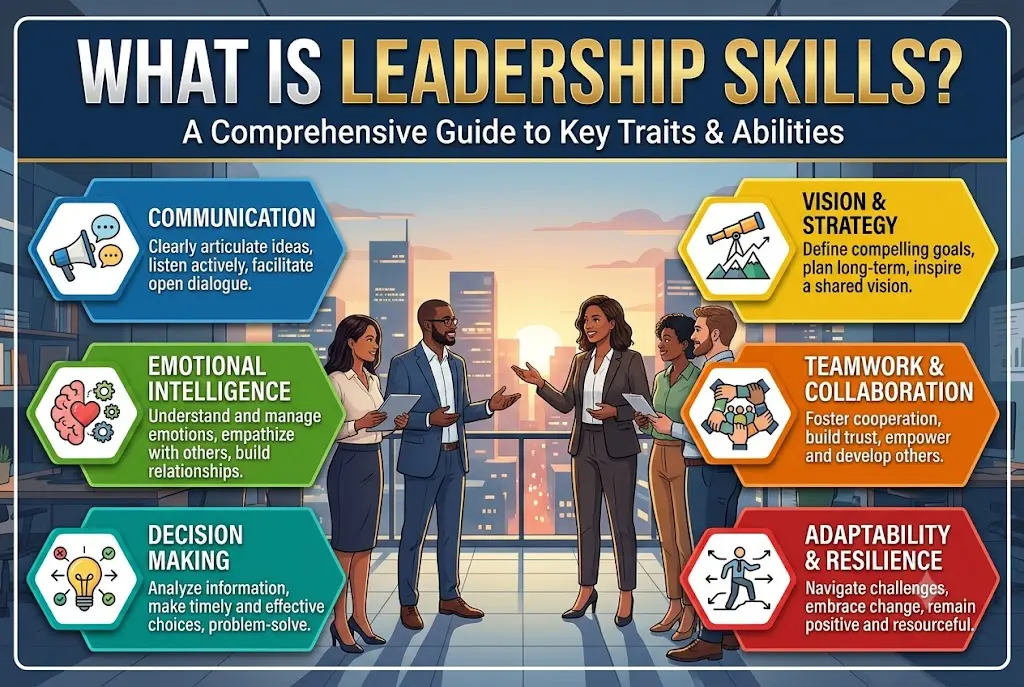
Leadership skills are the abilities and qualities that enable individuals to guide, motivate, influence, and support others toward achieving specific goals. These skills help leaders make decisions, communicate effectively, solve problems, and manage relationships within teams and organizations.
Leadership involves more than giving instructions. It requires understanding people, building trust, and creating an environment where everyone can contribute effectively.
Examples of leadership skills include:
- Communication
- Decision-making
- Problem-solving
- Emotional intelligence
- Team management
- Conflict resolution
- Strategic thinking
- Adaptability
- Accountability
- Motivation
Strong leadership skills allow individuals to inspire confidence and encourage positive action.
Why is Leadership Skills Important?

Leadership skills are essential because they influence performance, teamwork, and organizational success.
Improves Team Performance
Effective leaders help teams stay focused, productive, and aligned with goals.
Builds Trust
Trust is the foundation of strong professional relationships. Good leaders earn trust through honesty and consistency.
Enhances Communication
Clear communication reduces misunderstandings and improves collaboration.
Supports Decision-Making
Leadership skills help individuals evaluate situations and make informed choices.
Encourages Innovation
Leaders create environments where new ideas are welcomed and explored.
Promotes Growth
Strong leadership supports both personal and professional development.
These advantages make leadership skills valuable in nearly every industry and career stage.
Detailed Step-by-Step Guide
Step 1: Develop Self-Awareness
Understanding your strengths and weaknesses is the first step toward becoming a better leader.
Ask yourself:
- What are my strengths?
- Where do I need improvement?
- How do others perceive my leadership style?
Self-awareness creates a foundation for growth.
Step 2: Improve Communication Skills
Effective communication is one of the most important leadership skills.
Focus on:
- Active listening
- Clear instructions
- Constructive feedback
- Open discussions
Good communication strengthens relationships and improves teamwork.
Step 3: Build Emotional Intelligence
Emotional intelligence involves understanding and managing emotions effectively.
Key components include:
- Empathy
- Self-control
- Self-awareness
- Relationship management
Leaders with emotional intelligence often handle challenges more effectively.
Step 4: Learn Decision-Making
Strong leaders make informed decisions even during uncertainty.
To improve decision-making:
- Gather relevant information
- Analyze options
- Consider risks
- Evaluate outcomes
- Take responsibility
Consistent practice builds confidence.
Step 5: Strengthen Problem-Solving Skills
Every leader encounters challenges.
Approach problems by:
- Identifying causes
- Exploring solutions
- Evaluating alternatives
- Implementing improvements
Effective problem-solving supports organizational success.
Step 6: Develop Team-Building Abilities
Successful leaders create strong teams.
Encourage:
- Collaboration
- Respect
- Accountability
- Shared goals
Strong teams often achieve better results.
Step 7: Learn Conflict Resolution
Conflicts are unavoidable in professional environments.
Handle disagreements by:
- Listening to all perspectives
- Remaining neutral
- Focusing on solutions
- Encouraging respectful communication
Effective conflict resolution strengthens workplace relationships.
Step 8: Lead by Example
Actions influence others more than words.
Demonstrate:
- Integrity
- Professionalism
- Responsibility
- Commitment
Leading by example builds credibility.
Step 9: Encourage Continuous Learning
Great leaders never stop learning.
Stay updated through:
- Training programs
- Books
- Workshops
- Mentorship opportunities
Continuous improvement supports long-term success.
Step 10: Seek Feedback and Improve
Regular feedback provides valuable insights.
Ask team members and colleagues:
- What am I doing well?
- What can I improve?
- How can I support others more effectively?
Constructive feedback accelerates growth.
Benefits of Leadership Skills
Developing leadership skills offers many advantages.
- Improved communication
- Better decision-making
- Increased confidence
- Stronger professional relationships
- Enhanced teamwork
- Greater productivity
- Improved conflict management
- Better problem-solving abilities
- Increased influence
- Career advancement opportunities
- Stronger organizational performance
- Higher employee engagement
- Better adaptability
- Increased trust and credibility
- Long-term professional success
For example, a project manager with strong leadership abilities can motivate team members, improve collaboration, and achieve project goals more effectively.
Disadvantages / Risks
Although leadership offers many benefits, certain challenges and risks may arise.
- Increased responsibility
- Higher stress levels
- Difficult decision-making situations
- Managing diverse personalities
- Potential criticism
- Accountability for team outcomes
- Time-consuming responsibilities
- Balancing competing priorities
- Risk of burnout
- Pressure during organizational changes
Understanding these challenges helps leaders prepare and respond effectively.
Common Mistakes to Avoid
Many leaders limit their effectiveness through avoidable mistakes.
Poor Communication
Unclear expectations often create confusion and reduce productivity.
Micromanagement
Excessive control can reduce trust and employee motivation.
Ignoring Feedback
Leaders who refuse feedback may miss valuable improvement opportunities.
Avoiding Difficult Conversations
Addressing issues early prevents larger problems later.
Failing to Delegate
Trying to do everything alone often reduces efficiency.
Lack of Empathy
Understanding team members’ perspectives is essential for strong leadership.
Inconsistent Behavior
Consistency helps build trust and credibility.
Resisting Change
Adaptability is necessary in modern workplaces.
What are leadership skills?
Leadership skills are abilities that help individuals guide, motivate, and support others toward achieving goals.
Can leadership skills be learned?
Yes. Leadership skills can be developed through education, practice, feedback, and experience.
Why are leadership skills important?
They improve communication, teamwork, decision-making, and overall organizational performance.
What is the most important leadership skill?
While many skills are valuable, communication is often considered one of the most essential leadership abilities.
How can beginners improve leadership skills?
Beginners can focus on self-awareness, communication, emotional intelligence, and continuous learning.
Are leadership skills useful outside the workplace?
Yes. Leadership skills can improve relationships, community involvement, and personal development.
How does emotional intelligence support leadership?
Emotional intelligence helps leaders understand emotions, manage relationships, and respond effectively to challenges.
How long does it take to become a strong leader?
Leadership development is an ongoing process that improves through consistent learning and practical experience.
Expert Tips & Bonus Points
Experienced leaders often recommend the following strategies.
Focus on Relationships
Strong relationships create trust and improve collaboration.
Stay Adaptable
Successful leaders adjust to changing circumstances and new challenges.
Practice Active Listening
Listening carefully helps leaders understand concerns and build stronger connections.
Develop a Growth Mindset
View challenges as opportunities to learn and improve.
Empower Others
Encourage team members to take ownership and contribute ideas.
Maintain Integrity
Honesty and ethical behavior strengthen credibility.
Manage Time Effectively
Prioritize important responsibilities and avoid unnecessary distractions.
Invest in Learning
Continuous development improves leadership effectiveness.
Recognize Achievements
Acknowledging contributions increases motivation and engagement.
Remain Humble
Strong leaders remain open to learning regardless of experience.
Conclusion
Leadership is one of the most valuable skills an individual can develop. It influences how people communicate, collaborate, solve problems, and achieve goals. Whether leading a team, managing projects, or pursuing personal growth, strong leadership skills can create meaningful and lasting impact.
Throughout this guide, we explored the meaning of leadership skills, their importance, practical development strategies, benefits, challenges, common mistakes, frequently asked questions, and expert recommendations. These insights demonstrate that leadership is not limited to specific job titles or positions. Anyone willing to learn and improve can become a more effective leader.
While leadership development requires effort and patience, the rewards are substantial. Improved confidence, stronger relationships, better decision-making, and greater professional opportunities are just some of the benefits that come from strengthening leadership abilities.
As workplaces and industries continue to evolve, leadership will remain a critical factor in success. Individuals who focus on communication, emotional intelligence, adaptability, and continuous learning will be better prepared to guide others and overcome challenges. By applying the strategies discussed in this guide consistently, you can build the leadership skills needed to achieve personal growth, professional success, and long-term positive influence.
