

Introduction
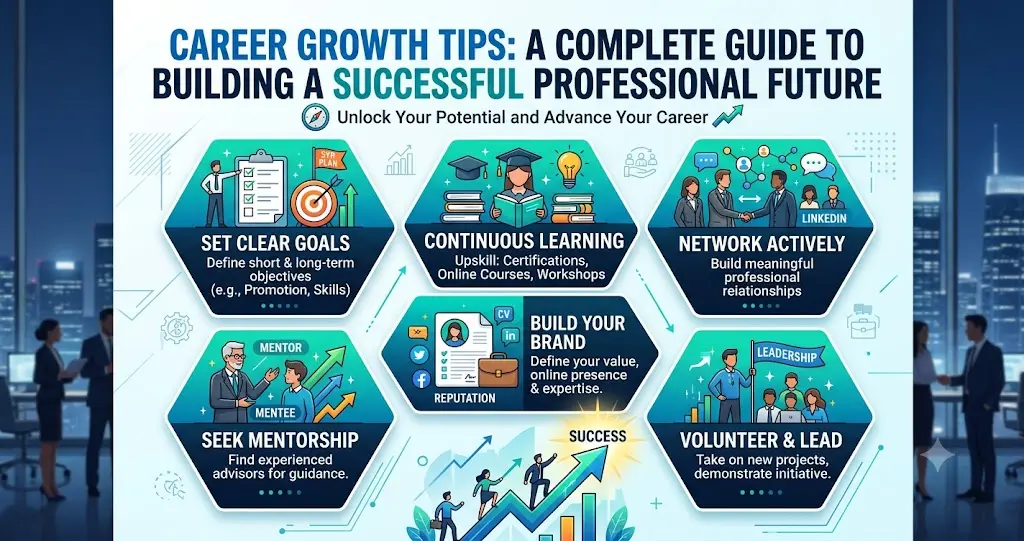
Building a successful career is a journey that requires planning, dedication, and continuous improvement. Whether you are entering the workforce for the first time or looking to advance in your current role, understanding effective career growth tips can help you move in the right direction. Career development is not only about earning promotions or increasing income. It also involves gaining new skills, expanding professional networks, improving confidence, and creating opportunities for long-term success.
In today’s competitive job market, employers value individuals who are adaptable, motivated, and committed to learning. As industries continue to evolve, professionals must keep their knowledge updated and remain open to change. Those who actively invest in their growth often achieve better results than those who rely solely on experience.
Fortunately, career advancement is not limited to a specific profession or industry. The principles of professional development apply to employees, freelancers, entrepreneurs, and job seekers alike. By following proven strategies, individuals can improve their performance, strengthen their reputation, and position themselves for future opportunities.
This guide explores essential career growth tips, explains their importance, provides a step-by-step roadmap, highlights benefits and challenges, answers frequently asked questions, and shares expert recommendations for achieving professional success in an ever-changing workplace.
What is Career Growth Tips?

Career growth tips are practical strategies and recommendations designed to help individuals improve their professional skills, increase opportunities, and progress in their chosen careers.
These tips often focus on areas such as:
- Skill development
- Professional networking
- Goal setting
- Leadership abilities
- Communication skills
- Personal branding
- Career planning
Career growth is not limited to promotions. It can also include learning new competencies, taking on greater responsibilities, improving performance, and exploring new career paths.
For example, a marketing professional may learn advanced digital marketing techniques, while an engineer may pursue certifications to increase expertise. Both individuals are investing in career growth even if they remain in the same position temporarily.
The purpose of career growth tips is to help professionals make informed decisions that support long-term success and personal satisfaction.
Why is Career Growth Tips Important?

Applying effective career growth tips can positively influence professional development and future opportunities.
Improves Professional Skills
Continuous learning helps individuals remain competitive and relevant in their industries.
Creates More Opportunities
Career development often leads to new responsibilities, projects, and advancement possibilities.
Increases Confidence
Gaining knowledge and experience helps professionals feel more capable and prepared.
Enhances Job Satisfaction
Progress and achievement contribute to greater workplace fulfillment.
Supports Financial Growth
Career advancement may lead to higher earnings and improved benefits.
Strengthens Professional Reputation
Consistent performance and development help build credibility and trust.
These advantages make career development an important priority for anyone seeking long-term success.
Detailed Step-by-Step Guide
Step 1: Define Your Career Goals
Start by identifying what you want to achieve professionally.
Ask yourself:
- What position do I want in the future?
- Which skills do I need?
- What industries interest me?
Clear goals provide direction and motivation.
Step 2: Assess Your Current Skills
Evaluate your strengths and weaknesses honestly.
Consider:
- Technical skills
- Communication abilities
- Leadership potential
- Problem-solving capabilities
Understanding your starting point helps create an effective development plan.
Step 3: Create a Learning Plan
Continuous learning is essential for growth.
Options include:
- Online courses
- Certifications
- Workshops
- Professional training
- Industry seminars
Regular learning helps maintain a competitive advantage.
Step 4: Develop Strong Communication Skills
Communication is one of the most valuable professional skills.
Focus on:
- Active listening
- Clear writing
- Public speaking
- Professional conversations
Strong communication improves collaboration and leadership potential.
Step 5: Build a Professional Network
Networking creates valuable opportunities.
Connect with:
- Colleagues
- Mentors
- Industry professionals
- Business leaders
Professional relationships often lead to new insights and career opportunities.
Step 6: Seek Feedback Regularly
Constructive feedback helps identify improvement areas.
Ask supervisors, mentors, and colleagues for suggestions on how to improve performance.
Step 7: Take Initiative
Employers value proactive individuals.
Volunteer for:
- New projects
- Leadership roles
- Problem-solving opportunities
- Process improvements
Initiative demonstrates commitment and ambition.
Step 8: Improve Time Management
Managing time effectively increases productivity and reliability.
Useful techniques include:
- Prioritizing tasks
- Setting deadlines
- Using calendars
- Avoiding distractions
Good time management supports consistent performance.
Step 9: Build Leadership Skills
Leadership is valuable at every career stage.
Practice:
- Decision-making
- Team collaboration
- Conflict resolution
- Accountability
Leadership development often creates advancement opportunities.
Step 10: Review and Adjust Your Plan
Career goals may change over time.
Regularly review progress and update your development strategy based on new opportunities and experiences.
Benefits of Career Growth Tips
Applying effective career growth tips offers many advantages.
- Improved professional skills
- Greater confidence
- Increased job opportunities
- Higher earning potential
- Better workplace performance
- Enhanced leadership abilities
- Stronger professional relationships
- Improved adaptability
- Increased job satisfaction
- Better decision-making skills
- Expanded industry knowledge
- Greater career stability
- Enhanced personal development
- Improved professional reputation
- Long-term success potential
For example, an employee who continuously develops new skills may become eligible for promotions faster than peers who remain stagnant.
Disadvantages / Risks
Although career growth is beneficial, certain challenges may arise.
- Increased responsibilities
- Additional time commitments
- Potential stress during transitions
- Financial investment in training
- Work-life balance challenges
- Risk of burnout
- Competitive workplace pressures
- Uncertainty when changing careers
- Learning curve difficulties
- Temporary setbacks during growth periods
Understanding these challenges helps individuals prepare effectively.
Common Mistakes to Avoid
Many professionals limit their progress by making avoidable mistakes.
Lack of Clear Goals
Without direction, career growth becomes difficult to measure and achieve.
Avoiding Continuous Learning
Industries change rapidly. Failing to update skills can reduce opportunities.
Ignoring Networking
Strong professional relationships often play an important role in career advancement.
Resisting Feedback
Constructive criticism provides valuable insights for improvement.
Waiting for Opportunities
Successful professionals often create opportunities rather than waiting for them.
Poor Time Management
Missed deadlines and disorganization can damage professional credibility.
Fear of Change
Avoiding new challenges may limit growth potential.
Neglecting Personal Branding
Professional reputation influences career opportunities significantly.
What are career growth tips?
Career growth tips are practical strategies that help individuals improve skills, increase opportunities, and advance professionally.
Why is career growth important?
Career growth supports professional development, financial improvement, increased confidence, and long-term success.
How can beginners start improving their careers?
Beginners can focus on learning new skills, setting goals, building networks, and seeking mentorship opportunities.
How often should career goals be reviewed?
Career goals should be reviewed regularly, often every few months, to ensure they remain relevant and achievable.
Is networking necessary for career success?
Networking is highly valuable because professional connections often provide advice, support, and opportunities.
What skills are most important for career growth?
Communication, problem-solving, leadership, adaptability, and technical expertise are commonly valued across industries.
Can career growth happen without changing jobs?
Yes. Growth can occur through skill development, increased responsibilities, leadership opportunities, and improved performance.
How long does career growth take?
Career development is an ongoing process. Results may appear gradually through consistent effort and learning.
Expert Tips & Bonus Points
Experienced professionals often recommend the following strategies.
Focus on Lifelong Learning
Continuous education supports long-term career success.
Find a Mentor
Guidance from experienced professionals can accelerate development.
Document Achievements
Maintain records of accomplishments, projects, and milestones.
Stay Adaptable
Flexibility helps professionals succeed in changing environments.
Build Strong Relationships
Professional connections often provide valuable support and opportunities.
Develop Leadership Qualities
Leadership skills remain valuable regardless of position.
Strengthen Problem-Solving Skills
Organizations value employees who can identify and solve challenges effectively.
Invest in Personal Branding
A strong professional reputation can create new opportunities.
Stay Positive
Challenges and setbacks are normal parts of career development.
Take Consistent Action
Small, regular improvements often produce significant long-term results.
Conclusion
Career success rarely happens by accident. It is usually the result of clear goals, continuous learning, strategic planning, and consistent effort. By applying proven career growth tips, professionals can strengthen their skills, improve workplace performance, and create opportunities for advancement. Whether you are just beginning your career journey or looking to reach the next level, investing in personal and professional development can produce meaningful results.
Throughout this guide, we explored the meaning of career growth tips, their importance, practical implementation steps, benefits, challenges, common mistakes, frequently asked questions, and expert recommendations. These insights demonstrate that career advancement is achievable when approached with dedication and purpose.
While growth often requires patience and persistence, the rewards can be significant. Increased confidence, stronger professional relationships, greater job satisfaction, and improved financial opportunities are just some of the benefits that come from ongoing development.
The workplace will continue to evolve, creating new challenges and opportunities. Professionals who remain adaptable, curious, and committed to improvement will be better prepared for future success. By taking consistent action, learning from experience, and embracing new opportunities, individuals can build rewarding careers that support both personal fulfillment and long-term professional achievement.
