

Introduction
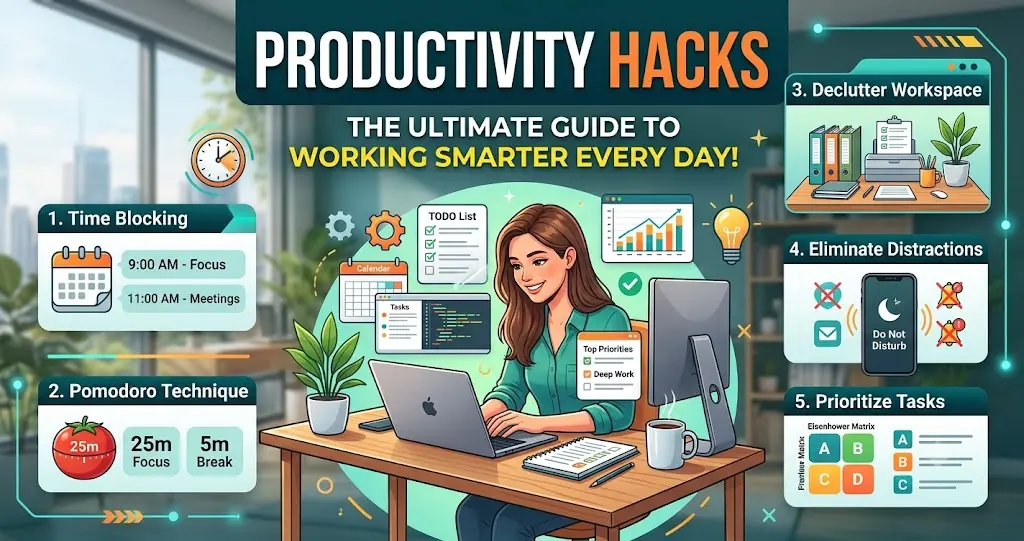
In today’s fast-paced world, staying productive has become more important than ever. People often struggle with endless to-do lists, distractions, missed deadlines, and overwhelming responsibilities. Whether you are a student, professional, entrepreneur, or freelancer, improving productivity can help you accomplish more while reducing stress and maintaining balance.
Many individuals believe productivity means working longer hours. In reality, true productivity is about working smarter rather than harder. Small improvements in daily habits can create significant results over time. This is where productivity hacks become valuable. These practical techniques help people organize tasks, manage time efficiently, maintain focus, and achieve goals more effectively.
The good news is that productivity is not a talent reserved for a few highly organized individuals. It is a skill that anyone can develop with the right strategies and consistent effort. By understanding proven methods and applying them regularly, it becomes easier to stay motivated, prioritize important work, and make steady progress.
This guide explores the concept of productivity hacks, explains why they matter, provides a detailed step-by-step approach, highlights benefits and potential drawbacks, discusses common mistakes, answers frequently asked questions, and shares expert recommendations for maximizing efficiency in both personal and professional life.
What is Productivity Hacks?

Productivity hacks are practical techniques, methods, and strategies designed to help people complete tasks more efficiently while making better use of their time and energy.
These approaches focus on improving:
- Time management
- Focus and concentration
- Organization
- Task prioritization
- Goal achievement
- Work efficiency
Unlike complicated systems, productivity hacks are often simple actions that can be implemented immediately.
Examples include:
- Creating daily task lists
- Using time-blocking techniques
- Eliminating distractions
- Setting priorities
- Taking strategic breaks
- Automating repetitive activities
The purpose of productivity hacks is not to stay busy all day. Instead, they help individuals focus on meaningful activities that produce valuable results.
Why is Productivity Hacks Important?
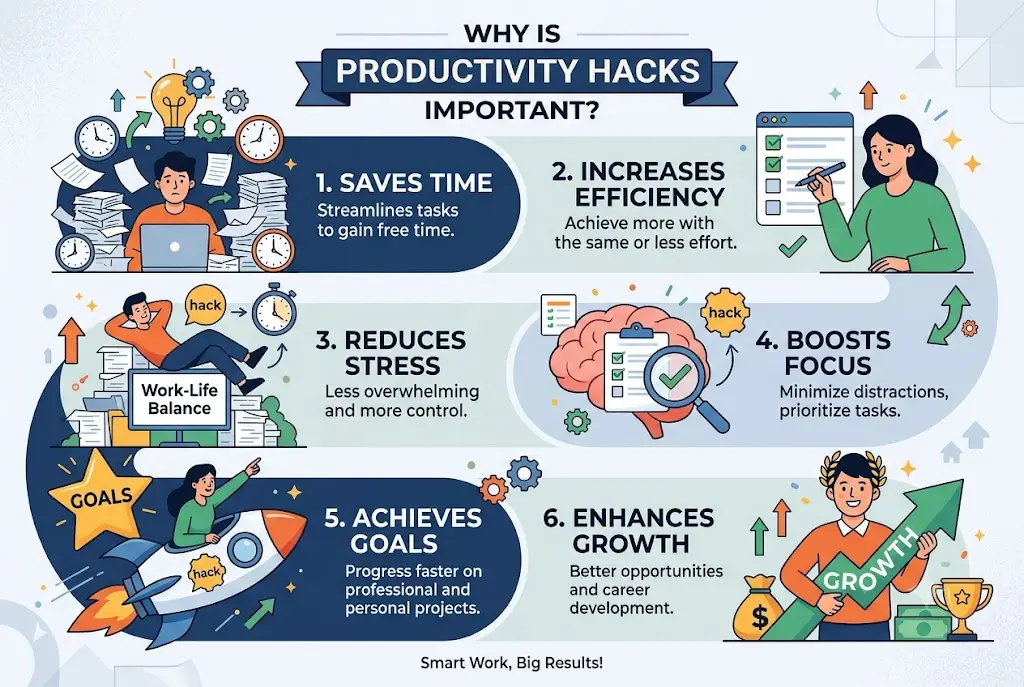
Productivity hacks play a critical role in helping individuals and organizations perform more effectively.
Better Time Management
Time is limited. Effective productivity strategies ensure that important tasks receive proper attention.
Increased Efficiency
People can accomplish more work without increasing stress or workload.
Reduced Stress
Clear planning and organization help prevent last-minute pressure and missed deadlines.
Improved Focus
Productivity methods reduce distractions and support deeper concentration.
Enhanced Goal Achievement
Consistent progress becomes easier when tasks are managed strategically.
Better Work-Life Balance
Efficient work habits create more time for personal activities and relaxation.
For these reasons, productivity hacks are valuable tools for both beginners and experienced professionals.
Detailed Step-by-Step Guide
Step 1: Define Clear Goals
Productivity begins with clarity.
Ask yourself:
- What do I want to achieve?
- Which tasks matter most?
- What are my priorities?
Clear goals provide direction and purpose.
Step 2: Create a Daily Task List
Write down important tasks before starting your day.
A simple list can help:
- Identify priorities
- Track progress
- Reduce forgetfulness
- Increase accountability
Keep your list realistic and manageable.
Step 3: Prioritize Important Tasks
Not all tasks have equal value.
Use prioritization methods such as:
- Urgent versus important
- High-impact activities
- Deadline-based planning
Focus on the work that delivers the greatest results.
Step 4: Use Time Blocking
Time blocking involves assigning specific periods for particular activities.
For example:
- 9:00–10:00: Email management
- 10:00–12:00: Project work
- 1:00–2:00: Meetings
This technique improves concentration and organization.
Step 5: Eliminate Distractions
Common distractions include:
- Social media
- Phone notifications
- Unnecessary browsing
- Background noise
Reducing interruptions significantly improves productivity.
Step 6: Apply the Two-Minute Rule
If a task takes less than two minutes, complete it immediately.
This prevents small tasks from accumulating and becoming overwhelming.
Step 7: Take Strategic Breaks
Regular breaks help maintain energy and focus.
Short breaks can:
- Reduce fatigue
- Improve concentration
- Support creativity
Working continuously for long periods often decreases performance.
Step 8: Automate Repetitive Tasks
Automation can save considerable time.
Examples include:
- Email filters
- Scheduled reminders
- Recurring calendar events
- Automated reports
Small efficiencies add up over time.
Step 9: Review Progress Daily
At the end of each day, evaluate your performance.
Consider:
- Completed tasks
- Remaining priorities
- Areas for improvement
Regular reviews encourage continuous growth.
Step 10: Build Consistent Habits
Productivity is not a one-time effort.
Daily habits create long-term success and sustainable improvement.
Benefits of Productivity Hacks
Applying productivity hacks offers numerous advantages.
- Better focus and concentration
- Improved time management
- Reduced stress levels
- Increased efficiency
- Higher quality work
- Better organization
- Faster goal achievement
- Greater motivation
- Improved decision-making
- Enhanced work-life balance
- Increased confidence
- Better task completion rates
- More free time
- Greater professional growth
- Stronger personal development
For example, a student using structured study sessions may learn more effectively, while a professional using time-blocking techniques may complete projects faster.
Disadvantages / Risks
Although productivity hacks can be beneficial, there are potential drawbacks.
- Overplanning can reduce flexibility
- Excessive optimization may cause stress
- Some techniques may not suit everyone
- Productivity obsession can lead to burnout
- Constant tracking may feel overwhelming
- Rigid schedules can limit creativity
- Too many tools may create confusion
- Unrealistic expectations may cause frustration
- Frequent system changes reduce consistency
- Poor implementation limits effectiveness
Understanding these risks helps individuals apply productivity strategies more effectively.
Common Mistakes to Avoid
Many people struggle with productivity because of avoidable mistakes.
Trying Too Many Methods at Once
Implementing multiple systems simultaneously often creates confusion.
Start with a few simple strategies.
Ignoring Priorities
Completing easy tasks first may create the illusion of productivity without meaningful progress.
Multitasking Excessively
Research consistently shows that multitasking reduces efficiency and increases errors.
Setting Unrealistic Goals
Overloading your schedule often leads to frustration and incomplete work.
Neglecting Rest
Rest is an important component of sustained productivity.
Failing to Review Progress
Without reflection, improvement becomes more difficult.
Constantly Checking Notifications
Frequent interruptions disrupt concentration and reduce performance.
Comparing Yourself to Others
Everyone works differently. Focus on improving your own processes.
What are productivity hacks?
Productivity hacks are techniques and strategies that help individuals complete tasks more efficiently while improving focus, organization, and time management.
Do productivity hacks work for everyone?
Most productivity principles are widely effective, but individuals should adapt techniques to their specific needs and preferences.
How can I improve productivity quickly?
Start by prioritizing important tasks, eliminating distractions, and creating a structured daily schedule.
Is multitasking a good productivity strategy?
In most cases, multitasking reduces focus and increases mistakes. Concentrating on one task at a time is usually more effective.
How often should I review my goals?
Daily and weekly reviews help maintain alignment with priorities and identify improvement opportunities.
Can productivity hacks reduce stress?
Yes. Better planning, organization, and time management often reduce anxiety and improve confidence.
What is the best productivity technique?
There is no universal solution. Techniques such as time blocking, prioritization, and habit building are commonly effective.
How long does it take to see results?
Many people notice improvements within a few days or weeks of consistently applying productivity strategies.
Expert Tips & Bonus Points
Experienced professionals often recommend the following practices.
Focus on High-Value Activities
Identify tasks that contribute most directly to your goals.
Start with the Hardest Task
Completing difficult work early can build momentum for the rest of the day.
Use Deadlines Wisely
Reasonable deadlines encourage action and accountability.
Protect Peak Energy Hours
Schedule important work during your most productive periods.
Keep Learning
Continuous improvement supports long-term success.
Create Systems
Reliable systems reduce decision fatigue and improve consistency.
Maintain Healthy Habits
Sleep, nutrition, and exercise significantly influence productivity.
Track Results
Measuring progress helps identify successful strategies.
Stay Flexible
Adapt your methods when circumstances change.
Celebrate Small Wins
Recognizing achievements increases motivation and confidence.
Conclusion
Productivity is not about filling every minute of the day with activity. Instead, it involves focusing on meaningful work, managing time effectively, and using resources wisely. By implementing practical productivity hacks, individuals can improve efficiency, reduce stress, and make consistent progress toward important goals.
Throughout this guide, we explored the meaning of productivity hacks, their importance, actionable implementation steps, benefits, risks, common mistakes, frequently asked questions, and expert recommendations. These strategies demonstrate that small adjustments can produce significant improvements over time.
The most successful people often rely on simple habits rather than complicated systems. They prioritize important tasks, eliminate distractions, maintain focus, and continuously refine their approach. These behaviors help create sustainable productivity without sacrificing well-being.
Whether you are a beginner looking to improve daily performance or an experienced professional seeking greater efficiency, the principles discussed in this article can provide valuable guidance. Start with one or two strategies, apply them consistently, and gradually build stronger habits. Over time, these efforts can transform the way you work, helping you achieve more while maintaining balance, satisfaction, and long-term success in every area of life.
