

Introduction
Remote work has become a normal part of professional life for millions of people worldwide. Whether you are a freelancer, entrepreneur, student, or employee working remotely, creating an effective home-based work routine is essential for long-term success. While working from home offers flexibility and convenience, it also comes with unique challenges that can affect productivity, focus, and work-life balance.
Many people initially believe that remote work is easier than office work. However, distractions, lack of structure, household responsibilities, and communication challenges can make it difficult to stay productive. This is why understanding effective work from home tips is so important. A well-organized approach helps individuals remain focused, complete tasks efficiently, and maintain professional performance.
The good news is that successful remote work does not require expensive equipment or complicated systems. Small improvements in daily habits, workspace setup, time management, and communication can make a significant difference. By adopting proven strategies, beginners and experienced professionals alike can create a productive environment that supports both career growth and personal well-being.
This guide explores practical work from home tips, explains their importance, provides a detailed step-by-step approach, highlights benefits and challenges, answers common questions, and shares expert recommendations for achieving success while working remotely.
What is Work From Home Tips?

Work from home tips are practical strategies, techniques, and best practices that help individuals perform effectively while working remotely. These recommendations are designed to improve productivity, organization, communication, and overall work performance.
Remote work often requires a different mindset compared to traditional office environments. Employees and freelancers must manage their schedules independently, stay motivated, and minimize distractions.
Examples of effective work from home tips include:
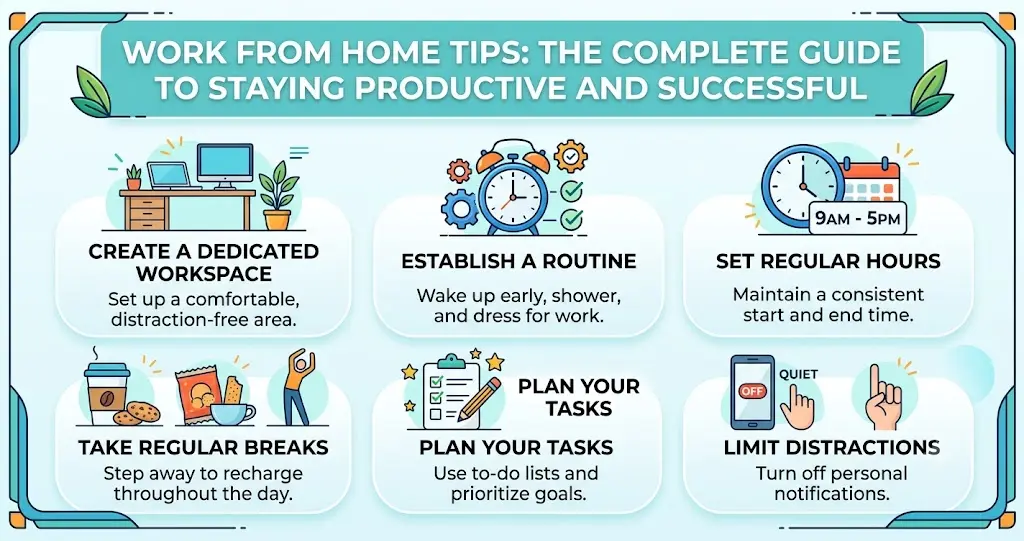
- Creating a dedicated workspace
- Establishing a daily routine
- Setting clear work hours
- Taking regular breaks
- Managing distractions
- Communicating effectively with colleagues
- Using productivity tools
These strategies help create a structured and professional remote work experience.
Why is Work From Home Tips Important?

Understanding and applying work from home tips can significantly improve both professional performance and personal well-being.
Improves Productivity
A structured routine helps individuals focus on important tasks and complete work efficiently.
Reduces Distractions
Proper planning minimizes interruptions from household activities, social media, and other distractions.
Supports Work-Life Balance
Healthy boundaries between work and personal life reduce stress and prevent burnout.
Enhances Communication
Effective communication helps remote teams collaborate successfully despite physical distance.
Promotes Consistency
Daily habits and routines create stability and improve long-term performance.
Increases Job Satisfaction
A productive and organized work environment often leads to greater professional satisfaction.
These benefits make remote work more sustainable and enjoyable over time.
Detailed Step-by-Step Guide
Step 1: Create a Dedicated Workspace
Choose a quiet area specifically for work.
Your workspace should include:
- Comfortable seating
- Proper lighting
- Reliable internet access
- Necessary equipment
A dedicated workspace helps separate professional responsibilities from personal activities.
Step 2: Establish a Daily Schedule
Create a consistent routine.
Start and finish work at regular times whenever possible.
A predictable schedule improves focus and productivity.
Step 3: Set Daily Goals
Each morning, identify key tasks that need completion.
For example:
- Respond to important emails
- Complete project assignments
- Attend meetings
- Review progress
Clear goals provide direction throughout the day.
Step 4: Eliminate Distractions
Common distractions include:
- Television
- Social media
- Household chores
- Unnecessary phone notifications
Reducing interruptions helps maintain concentration.
Step 5: Use Productivity Tools
Many digital tools support remote work.
Examples include:
- Task management software
- Calendar applications
- Communication platforms
- Note-taking tools
These resources improve organization and collaboration.
Step 6: Take Regular Breaks
Working continuously for long periods can reduce efficiency.
Short breaks help:
- Refresh the mind
- Improve concentration
- Reduce fatigue
A brief walk or stretching session can be beneficial.
Step 7: Maintain Professional Communication
Stay connected with colleagues and clients.
Good communication involves:
- Timely responses
- Clear messaging
- Active participation in meetings
- Regular updates
Strong communication supports teamwork and accountability.
Step 8: Prioritize Important Tasks
Focus on high-priority work before less important activities.
This approach ensures essential responsibilities receive adequate attention.
Step 9: Protect Work-Life Balance
Avoid extending work hours unnecessarily.
When the workday ends, disconnect from professional tasks and focus on personal activities.
Step 10: Review and Improve
Evaluate your performance regularly.
Ask yourself:
- What worked well?
- What caused distractions?
- How can productivity improve?
Continuous improvement leads to better results over time.
Benefits of Work From Home Tips
Applying effective work from home tips provides many advantages.
- Improved productivity
- Better time management
- Greater flexibility
- Reduced commuting stress
- Enhanced work-life balance
- Increased focus
- Better organization
- Higher job satisfaction
- Improved communication
- Greater independence
- Reduced workplace distractions
- More control over the environment
- Better energy management
- Increased efficiency
- Enhanced professional performance
For example, a remote employee who follows a structured schedule may complete tasks faster while maintaining a healthier personal routine.
Disadvantages / Risks
Although remote work offers many benefits, certain challenges can occur.
- Feelings of isolation
- Difficulty separating work and personal life
- Increased distractions at home
- Communication barriers
- Reduced social interaction
- Potential technology issues
- Lack of supervision
- Risk of burnout
- Decreased motivation
- Home environment interruptions
Recognizing these challenges allows individuals to develop effective solutions.
Common Mistakes to Avoid
Many remote workers struggle because they make common mistakes.
Working Without a Schedule
An inconsistent routine often leads to reduced productivity.
Ignoring Breaks
Skipping breaks can increase fatigue and decrease concentration.
Multitasking Excessively
Trying to manage too many tasks at once often reduces efficiency.
Poor Communication
Failing to communicate regularly can create misunderstandings and delays.
Working from Bed
A professional workspace encourages focus and productivity.
Neglecting Physical Health
Regular movement and healthy habits support long-term performance.
Allowing Constant Distractions
Frequent interruptions make it difficult to complete important work.
Working Excessive Hours
Long workdays can increase stress and contribute to burnout.
What are the most effective work from home tips?
The most effective strategies include maintaining a dedicated workspace, creating a schedule, minimizing distractions, and setting clear goals.
How can I stay productive while working remotely?
Focus on task prioritization, structured routines, regular breaks, and consistent communication with colleagues.
How do I avoid distractions at home?
Turn off unnecessary notifications, create boundaries with family members, and maintain a designated work area.
Is working from home suitable for everyone?
Remote work can benefit many people, but individual preferences, responsibilities, and work styles may influence effectiveness.
How can I improve work-life balance?
Set clear working hours, take regular breaks, and avoid checking work messages after the workday ends.
What equipment is necessary for remote work?
A reliable computer, internet connection, comfortable workspace, and communication tools are usually essential.
How can remote workers avoid burnout?
Take breaks, maintain healthy habits, establish boundaries, and schedule time for relaxation.
Why is communication important when working remotely?
Effective communication helps teams collaborate efficiently, solve problems quickly, and stay aligned on goals.
Expert Tips & Bonus Points
Experienced remote professionals often recommend several additional strategies.
Start the Day with a Plan
A clear daily plan improves focus and productivity.
Dress Professionally
Getting dressed for work can help create a productive mindset.
Use Time Blocking
Allocate specific time periods for important tasks.
Stay Organized
Maintain digital and physical organization to reduce stress.
Continue Learning
Develop new skills to remain competitive and adaptable.
Build Healthy Habits
Good sleep, exercise, and nutrition support consistent performance.
Create Boundaries
Separate professional responsibilities from personal life whenever possible.
Monitor Performance
Track progress regularly to identify opportunities for improvement.
Maintain Social Connections
Regular interaction with colleagues helps reduce feelings of isolation.
Focus on Results
Prioritize meaningful outcomes rather than simply staying busy.
Conclusion
Remote work has transformed the way people approach their professional responsibilities. While working from home offers flexibility, convenience, and independence, success requires more than simply having a laptop and internet connection. Effective planning, strong communication, and consistent habits play a major role in achieving positive results.
Throughout this guide, we explored essential work from home tips that help individuals improve productivity, maintain focus, and create a healthy balance between professional and personal life. From establishing a dedicated workspace and managing time effectively to avoiding distractions and communicating clearly, each strategy contributes to a more successful remote work experience.
Although remote work presents challenges such as isolation, distractions, and potential burnout, these obstacles can often be managed through thoughtful planning and self-discipline. Individuals who continuously evaluate and improve their routines are more likely to achieve long-term success.
As remote work continues to grow across industries, developing strong remote working habits becomes increasingly important. By applying the strategies discussed in this guide, beginners and experienced professionals can build a productive, organized, and sustainable work environment that supports both career advancement and personal well-being. Consistent effort, adaptability, and a commitment to improvement will help remote workers thrive in today’s evolving workplace.
