

Introduction
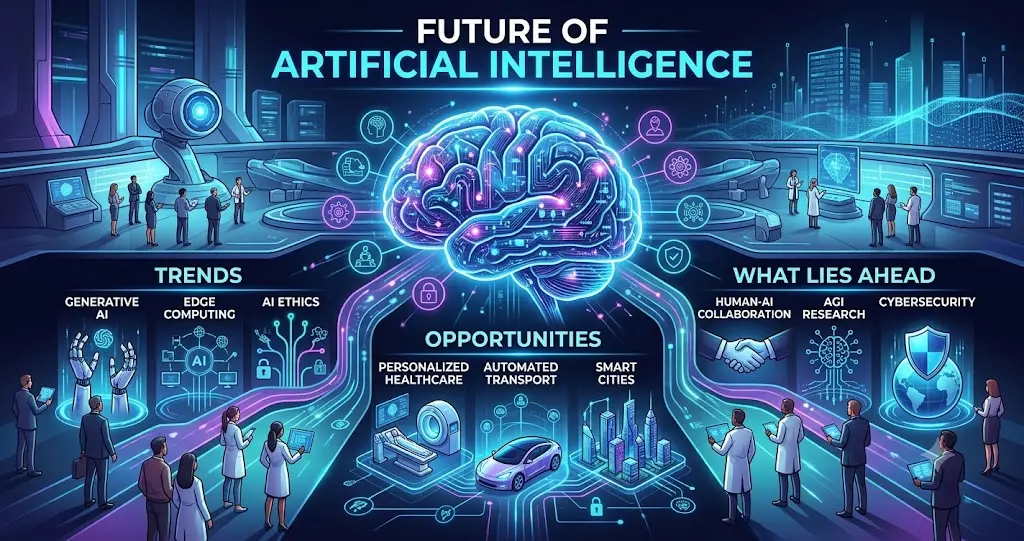
The future of artificial intelligence is one of the most discussed topics in technology today. From smart assistants and recommendation systems to advanced medical tools and self-driving vehicles, artificial intelligence is transforming the way people live and work. What once seemed like science fiction is now becoming part of everyday life.
As technology continues to evolve, artificial intelligence is expected to influence nearly every industry. Businesses are using intelligent systems to improve efficiency, governments are exploring new applications for public services, and individuals are benefiting from personalized digital experiences. These developments are creating exciting opportunities while also raising important questions about ethics, privacy, and employment.
For beginners, understanding the future of artificial intelligence provides insight into upcoming technological changes. For intermediate learners and professionals, it offers a chance to prepare for emerging trends and career opportunities. The pace of innovation is increasing, making it more important than ever to stay informed.
This guide explores what the future of artificial intelligence means, why it matters, how it may develop in the coming years, its advantages and challenges, common misconceptions, frequently asked questions, and practical tips for adapting to an increasingly intelligent world.
What is Future of Artificial Intelligence?

The future of artificial intelligence refers to the expected development, growth, and impact of intelligent technologies over the coming years and decades. It includes advancements in machine learning, automation, robotics, natural language processing, computer vision, and decision-making systems.
Artificial intelligence is designed to perform tasks that normally require human intelligence. These tasks include recognizing patterns, understanding language, analyzing data, solving problems, and making predictions.
The future of artificial intelligence is not limited to creating smarter machines. It also involves improving collaboration between humans and technology. Instead of replacing people entirely, many future systems are expected to assist professionals, enhance productivity, and support better decision-making.
Examples of future developments may include:
- More advanced healthcare diagnostics
- Smarter transportation systems
- Personalized education platforms
- Intelligent manufacturing processes
- Improved cybersecurity solutions
- Enhanced virtual assistants
As research continues, artificial intelligence is expected to become more accurate, efficient, and accessible across various sectors.
Why is Future of Artificial Intelligence Important?
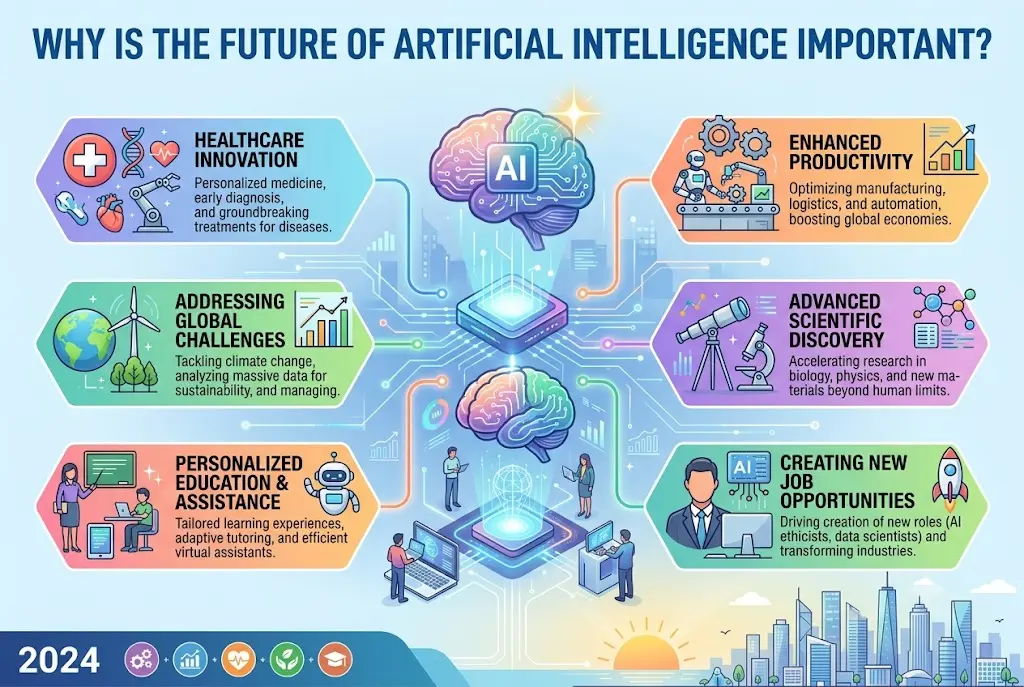
The future of artificial intelligence is important because it has the potential to reshape economies, industries, and daily life.
Economic Growth
Many experts believe intelligent technologies will contribute significantly to global economic development through increased productivity and innovation.
Better Healthcare
Advanced systems can help doctors identify diseases earlier, improve treatment plans, and support medical research.
Improved Education
Personalized learning experiences can help students learn at their own pace and receive customized support.
Enhanced Productivity
Businesses can automate repetitive tasks, allowing employees to focus on creative and strategic activities.
Scientific Advancement
Researchers can process massive amounts of data faster, accelerating discoveries in various fields.
Better Customer Experiences
Organizations can provide faster, more personalized services using intelligent systems.
The growing influence of these technologies makes understanding future developments increasingly valuable for individuals and businesses alike.
Detailed Step-by-Step Guide
Step 1: Understand Current Technology
Before exploring future possibilities, it is important to understand existing technologies.
Study concepts such as:
- Machine learning
- Data analytics
- Automation
- Neural networks
- Computer vision
A strong foundation makes future developments easier to understand.
Step 2: Follow Industry Trends
Technology evolves rapidly.
Stay informed by:
- Reading industry publications
- Following research developments
- Attending webinars
- Watching expert discussions
- Exploring case studies
Regular learning helps identify emerging opportunities.
Step 3: Develop Relevant Skills
The future workforce will require both technical and non-technical skills.
Important skills include:
- Problem-solving
- Data literacy
- Programming
- Communication
- Critical thinking
- Adaptability
These abilities can improve career prospects in a technology-driven environment.
Step 4: Learn About Automation
Automation is expected to play a major role in future workplaces.
Understanding how automated systems function can help professionals adapt to changing job requirements.
Step 5: Explore Industry Applications
Different industries use intelligent systems in unique ways.
Examples include:
- Healthcare for diagnostics
- Finance for fraud detection
- Retail for customer recommendations
- Manufacturing for quality control
- Agriculture for crop monitoring
Exploring these applications provides practical insight.
Step 6: Understand Ethical Considerations
Technological advancement must be balanced with responsibility.
Key concerns include:
- Privacy protection
- Data security
- Fairness
- Transparency
- Accountability
Awareness of these issues supports responsible innovation.
Step 7: Monitor Regulatory Developments
Governments worldwide are developing policies related to technology use.
Understanding regulations can help businesses and professionals remain compliant.
Step 8: Build Digital Confidence
Individuals who embrace technology often adapt more successfully to change.
Practice using modern tools and digital platforms whenever possible.
Step 9: Encourage Lifelong Learning
Continuous learning will become increasingly important as technologies evolve.
Investing in education helps maintain relevance in a competitive environment.
Step 10: Prepare for Collaboration
The future is likely to involve close cooperation between humans and intelligent systems.
Learning how to work alongside technology can create significant advantages.
Benefits of Future of Artificial Intelligence
The future of artificial intelligence offers many potential benefits.
- Increased productivity across industries
- Faster problem-solving capabilities
- Improved healthcare outcomes
- Enhanced customer experiences
- Better educational opportunities
- More accurate data analysis
- Reduced operational costs
- Smarter transportation systems
- Improved accessibility for people with disabilities
- Enhanced scientific research
- Greater innovation potential
- Stronger cybersecurity defenses
- Better resource management
- Increased workplace efficiency
- Improved decision-making support
For example, hospitals may use advanced diagnostic tools to identify diseases earlier, while businesses can analyze customer behavior more effectively to improve services.
Disadvantages / Risks
Despite its advantages, the future of artificial intelligence also presents challenges.
- Potential job displacement in certain industries
- Privacy concerns related to data collection
- Cybersecurity risks
- Ethical dilemmas in automated decisions
- Dependence on technology
- High implementation costs
- Potential misuse of intelligent systems
- Bias in algorithms and data
- Regulatory uncertainties
- Reduced human oversight in some processes
Addressing these risks will require cooperation among governments, businesses, researchers, and communities.
Common Mistakes to Avoid
Many people misunderstand how intelligent technologies may develop in the future.
Assuming Technology Will Replace Everyone
While automation may change some jobs, many new opportunities are expected to emerge.
Ignoring Skill Development
Technology evolves quickly. Failing to learn new skills can limit future opportunities.
Believing Every Prediction
Not every forecast becomes reality. Evaluate information carefully and rely on credible sources.
Overlooking Ethics
Technological advancement should always consider fairness, privacy, and accountability.
Resisting Change Completely
Avoiding new technology can make adaptation more difficult in the long run.
Depending Entirely on Automation
Human judgment remains important in many situations.
Ignoring Data Security
Protecting information should remain a priority as digital systems become more advanced.
Underestimating Human Creativity
Creativity, empathy, and critical thinking remain valuable human strengths.
What is the future of artificial intelligence?
The future of artificial intelligence refers to the continued advancement and integration of intelligent technologies into various aspects of society, business, and everyday life.
Will artificial intelligence replace human jobs?
Some tasks may become automated, but many new jobs and career opportunities are expected to emerge as technology evolves.
Which industries will benefit the most?
Healthcare, finance, manufacturing, education, transportation, agriculture, and retail are among the industries expected to experience significant benefits.
Is artificial intelligence safe?
Safety depends on responsible design, regulation, testing, and oversight. Proper safeguards can reduce many risks.
How can students prepare for future changes?
Students can focus on developing digital literacy, critical thinking, communication skills, and adaptability while staying informed about technological trends.
What role will humans play in the future?
Humans will continue to provide creativity, leadership, ethics, emotional intelligence, and strategic decision-making that technology cannot fully replicate.
Can small businesses benefit from intelligent technologies?
Yes. Small businesses can improve customer service, marketing, efficiency, and data analysis through affordable technology solutions.
What are the biggest challenges ahead?
Major challenges include privacy concerns, cybersecurity threats, ethical issues, workforce transitions, and regulatory development.
Expert Tips & Bonus Points
Professionals studying future technological trends often recommend several practical strategies.
Focus on Adaptability
The ability to learn and adapt will remain one of the most valuable skills.
Strengthen Human Skills
Communication, leadership, creativity, and emotional intelligence will continue to be important.
Stay Curious
Technology changes rapidly. Continuous curiosity encourages growth and innovation.
Learn Data Literacy
Understanding data can improve decision-making and career opportunities.
Embrace Lifelong Learning
Regular education helps individuals remain competitive and informed.
Follow Trusted Sources
Accurate information is essential when evaluating emerging technologies.
Build a Diverse Skill Set
Combining technical knowledge with business and communication skills creates greater flexibility.
Think Critically
Evaluate claims carefully and avoid assuming every technological prediction will occur exactly as expected.
Understand Ethics
Responsible technology use requires awareness of privacy, fairness, and accountability.
Start Early
Preparing today can provide significant advantages tomorrow.
Conclusion
The future of artificial intelligence represents one of the most significant technological transformations of the modern era. As intelligent systems continue to advance, they are expected to influence industries, economies, workplaces, and daily experiences in ways that were once difficult to imagine. From healthcare and education to transportation and scientific research, the opportunities for innovation appear extensive.
At the same time, the future will not be shaped by technology alone. Human decisions, ethical considerations, regulations, and societal values will play a critical role in determining how these advancements are used. Success will depend on balancing innovation with responsibility while ensuring that technological progress benefits as many people as possible.
Throughout this guide, we explored the meaning of the future of artificial intelligence, its importance, practical preparation steps, benefits, risks, common mistakes, frequently asked questions, and expert recommendations. These insights can help readers better understand the changes ahead and prepare for new opportunities.
Individuals who remain informed, adaptable, and committed to continuous learning will be better positioned to thrive in a rapidly evolving world. By developing relevant skills and embracing innovation responsibly, people can participate actively in shaping a future where technology supports human progress, economic growth, and improved quality of life for generations to come.
